• Featured
  • Australasia
  • The Americas
  • Europe
  • Africa
  • Market
  • Precious Metals
  • Resources
  • Currencies
  • Real Estate
  • The Bonner Diaries

A New Bretton Woods Vs. The Old Bretton Woods


By Nathan Lewis • November 21st, 2008 • Related Articles • Filed Under

About the Author

Nathan LewisNathan Lewis is the author of Gold: the Once and Future Money, published by Agora Publishing and J. Wiley. He runs an investment fund in Westport, Connecticut.

See All Articles by This Author

  • Financial Crises in History
  • Inflation: Ron Paul Explains How We Got Into This Mess
  • David Ricardo’s Economic Theory is Sound Doctrine
  • Is Gold Money?
  • How the U.S. Dollar Came to be the World’s Reserve Currency
Filed Under: Market
Tags: bretton woods • monetary systems • new hampshire
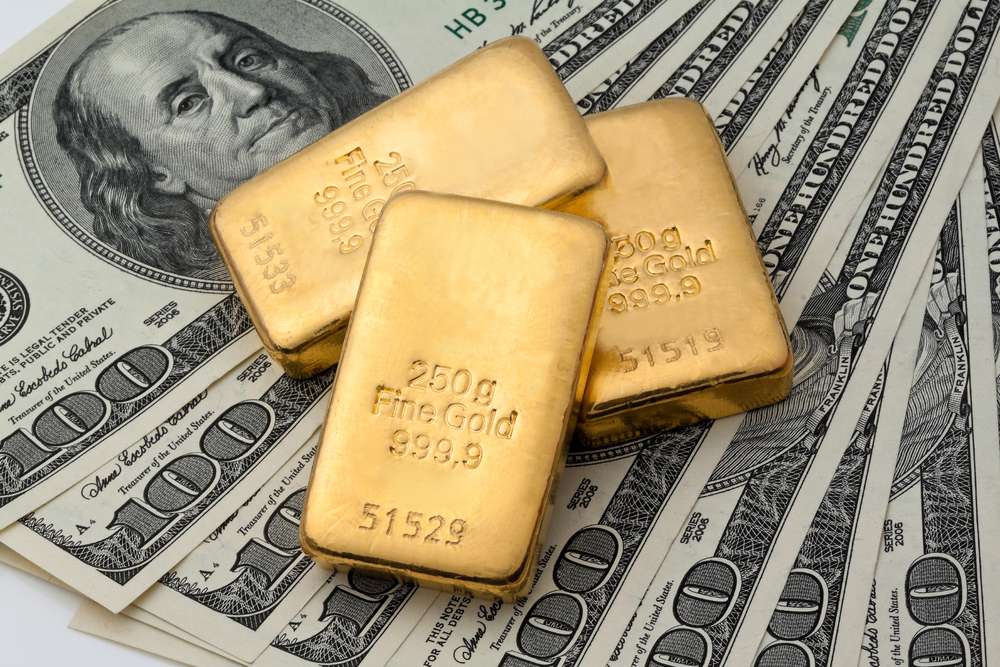
feature photo

In 1944, the world leaders that gathered in New Hampshire decided on a system based on gold. This was no innovation, as monetary systems for the past few centuries had also been based on gold. In the Bretton Woods system, the dollar was pegged to gold at $35/oz., and other currencies were pegged to the dollar. Currencies didn't float in those days. Floating, manipulated currencies were considered an abomination. Exchange rates remained fixed. This stable, gold-linked system formed the foundation for a wonderful worldwide expansion of wealth in the 1950s and 1960s - even among the war's losers, Germany and Japan.

Unfortunately, there was a flaw in this plan. Interest rate manipulation, as practiced by the Fed, was surging in popularity. It was hoped this currency tomfoolery would prevent another Great Depression, and every other little recession along the way. This "monetary policy" and currency manipulation was contrary to the simple, automatic currency board-like mechanisms by which gold standard systems should be operated. The result was that the fixed exchange rates and gold link came under constant pressure.

For a while, governments attempted to have it both ways. They imposed various capital controls to keep exchange rates fixed - while at the same time their central banks played games that caused exchange rates to diverge. The dollar/gold peg was not maintained by judicious supply adjustment, as a currency board would operate, but by heavy-handed intervention in the gold market in London.

Eventually, the conflict between manipulative central banks and the gold link became overwhelming. In January 1970, Richard Nixon installed his friend Arthur Burns as Chairman of the Federal Reserve. Burns immediately opened the monetary floodgates to help offset the recession of the time - following the day's conventional wisdom. In August 1971, the conflict between Burns' manipulation and the gold link became too great, and, rather than abandoning Burns' currency games, it was decided to abandon the gold link instead. The dollar had become a floating currency. By 1973, all the major currencies floated.

An economic catastrophe ensued, the inflation of the 1970s. Even in the 1980s and 1990s, as currencies were stabilized somewhat, economies never regained the health they showed in the 1950s and 1960s. Emerging markets, in particular, were beset by regular currency disasters.

The environment of monetary chaos that we have lived in for the past thirty-seven years has finally produced a political willingness to fix the problem. Governments sense that, if they do not take action now, a worldwide crisis may ensue. Just as in 1944, governments want to return to the monetary stability upon which capitalism was founded. On November 15, governments will gather to talk about a "New Bretton Woods." There is even some talk that gold will play a part. The creators of this New Bretton Woods, if they are able to agree on anything at all, would do well to recognize the successes and faixlures of the original Bretton Woods.

Bretton Woods was, overall, a great success. This was due to the link with gold, and the fixed exchange rates worldwide. Capitalism since the Industrial Revolution had been based on this monetary principle, and it worked again as it had in the past.

The reason that the Bretton Woods gold standard did not persist indefinitely was not government deficits, or insufficient gold bullion reserves, "current account imbalances" or any other such thing. The only reason that governments decided to abandon the gold link was that they preferred to play central bank games with their currencies. A New Bretton Woods must wholly and completely abandon such practices.

Without these guiding principles, this month's discussions are likely to devolve into an unworkable hodgepodge of currency baskets, CPI targets, promises likely to be broken, and rhetorical vagaries. Certainly no usable system would emerge, although an unusable system might.

A New Bretton Woods, of gold-linked currencies worldwide, would be very easy to create. It could be done in a weekend, and wouldn't cost a dime. It is merely a decision to manage currencies one way - a gold link - rather than another way. Unfortunately, I don't think today's generation of monetary bureaucrats in the U.S. and Europe have the talent, skills or understanding to accomplish this solution. They can't even identify it.

I place my hopes on Russia, China and the Middle East. Their monetary bureaucrats don't have the skills either, as far as I can tell, but they are willing to learn. As outsiders, they can see that the G7's conventional wisdom isn't working.

I wish the best for those governments willing to step up with a solution to the problems that have plagued the world since 1971. I just hope they get on with it before things get too out of hand.

Regards,

Nathan Lewis
for The Daily Reckoning Australia

VN:F [1.9.11_1134]
please wait...
Rating: 0.0/10 (0 votes cast)
VN:F [1.9.11_1134]
Rating: 0 (from 0 votes)


P.S. to get The Daily Reckoning direct to your inbox sign up to our free e-mail newsletter or if you prefer to use RSS, subscribe to the Daily Reckoning RSS feed.

Related Articles:

  • Financial Crises in History
  • Inflation: Ron Paul Explains How We Got Into This Mess
  • David Ricardo’s Economic Theory is Sound Doctrine
  • Is Gold Money?
  • How the U.S. Dollar Came to be the World’s Reserve Currency

About the Author

Nathan LewisNathan Lewis is the author of Gold: the Once and Future Money, published by Agora Publishing and J. Wiley. He runs an investment fund in Westport, Connecticut.

See All Posts by This Author

There Are 9 Responses So Far. »

  1. Comment by Curt on 22 November 2008:

    Nathan, great article. The world is headed towards a global currency with a global bank followed by a global government. The only problem is that 'capitalism' is not part of the plan.

    Foreign world leaders are using this opportunity to create a global socialistic economy, which is the exactly was WWII fought to overcome. A global socialistic economy will once and for all enslave mankind. Most of the world government leaders are corrupt and their corruption will be empowered as America and the dollar weaken.

    Despite this, the economy will remain in recession for decades. Gold standard or not, they will not be able to stop the finanicial damage that his been building for 40-50 years. I am torn as I which for my gold investments to prosper, I also see the future of America declining and the rise of a corrupt global government.

    VA:F [1.9.11_1134]
    please wait...
    Rating: 0.0/5 (0 votes cast)
    VA:F [1.9.11_1134]
    Rating: 0 (from 0 votes)
  2. Comment by Charles Norville on 22 November 2008:

    Global socialism is the new thing (unfortunately), global corporatism is a sham of corruption. The gold standard fixed to $35US/oz did not allow the currency printing press to run overtime, to inflate assets wealth at the expense of others. Now every one has a printing press. The biggest bubble is population which feeds the asset wealth, welcome to WWIII.

    I'm wondering if China will inflate its yuan to 40% and close down the printing presses are they economically strong enough? Shouldn't this help their imports of cheaper materials and energy to promote domesticated industry.

    VA:F [1.9.11_1134]
    please wait...
    Rating: 0.0/5 (0 votes cast)
    VA:F [1.9.11_1134]
    Rating: 0 (from 0 votes)
  3. Comment by Jon Bain on 22 November 2008:

    I would suggest an energy standard, instead of gold.

    All energy can be converted to electricity, which can be consumed in nearly all situations. People would be motivated to create energy efficient products in order to save energy (new money).

    Reusable energy, such as wind and water, would then be ideal, and this would fuel the global economy in this direction. It would inspire confidence, which is severly lacking in the current system. And, energy has value of its own, unlike gold or paper money.

    The credit for this idea would be attributed to Sid Meier of Firaxis, as far as I can tell.

    VA:F [1.9.11_1134]
    please wait...
    Rating: 0.0/5 (0 votes cast)
    VA:F [1.9.11_1134]
    Rating: 0 (from 0 votes)
  4. Comment by Charles Norville on 23 November 2008:

    I don't know with energy it is turned on and off like a tap, look at oil. Gold is a finite rare earth metal. But its interesting about making things more energy efficient - this business of carbon tax the consumer is bound to get hit in the pocket, whilst manufacturers make obsolescence part of their market strategy. Look at printers, for the consumer (unlike the worlds treasuries lol), the manufacturer is always changing the ink heads to prevent generic substitution.

    Still it would be kind of strange going back to $35US/oz for gold, talk about deflation, one thing for sure the $US is in deep trouble, and the $US seems to be in charge of values of things set against its economy. As the saying goes "who put them (US) in charge"

    VA:F [1.9.11_1134]
    please wait...
    Rating: 0.0/5 (0 votes cast)
    VA:F [1.9.11_1134]
    Rating: 0 (from 0 votes)
  5. Comment by Jon Bain on 24 November 2008:

    Adolph Hitler put them in charge! Inadvertantly. But so long as the world is hedged in by that bloody US$, its never going to get out of this slump.

    VA:F [1.9.11_1134]
    please wait...
    Rating: 0.0/5 (0 votes cast)
    VA:F [1.9.11_1134]
    Rating: 0 (from 0 votes)
  6. Comment by NewTV.com on 25 November 2008:

    Nice work Nathan.

    The end of your article is perhaps the most intriguing as you refer to China, Russia and the Middle East.

    All three regions have hinted recently at a new era of gold and silver based currencies. The Middle East (OPEC) has even hinted on multiple occasions that oil and natural gas can be sold for silver and gold, as well as a basket of currencies.

    I would also like to reply to Jon Bain’s comment.

    Jon, a currency has NEVER (as in thousands of years) been backed by something that is difficult to transport. Food and grain? Yes. But energy? NO. It is a little silly to contemplate energy as a currency. You could however barter with energy (as with many other good and services.)

    VA:F [1.9.11_1134]
    please wait...
    Rating: 0.0/5 (0 votes cast)
    VA:F [1.9.11_1134]
    Rating: 0 (from 0 votes)
  7. Comment by spring morning on 25 November 2008:

    I spent 4 years in China seeing the reality of Mises theory of Malinvestment. I highly doubt their leaders will give up control of the money supply; it is just too useful a tool.

    VA:F [1.9.11_1134]
    please wait...
    Rating: 0.0/5 (0 votes cast)
    VA:F [1.9.11_1134]
    Rating: 0 (from 0 votes)
  8. Comment by Sonja Galic on 10 March 2009:

    Given human innate programming we must continue to live in a "Christian Social - Democrat Capitalistic" society ie a kind capitalism, a welfare state, which allows each person to own something personally, an income, a job, a home, a family, privacy,land, to be able to strive for those, preferably without greed by Uber-capitalism, mega-companies owned by nobody and everybody s shareholders or by a Mega Polit Bureau; everything human is subjective so whether money is pegged to gold at 35 an ounce or to the dollar doesn't matter - land would be better; land is now in short supply as population outstrips the earth's crust.Land should be expensive.
    Banks must be regulated more - perhaps as they are in Australia. The men in charge of them were playing childish games, unknowingly.

    VA:F [1.9.11_1134]
    please wait...
    Rating: 0.0/5 (0 votes cast)
    VA:F [1.9.11_1134]
    Rating: 0 (from 0 votes)
  9. Comment by Sonja Galic on 10 March 2009:

    All economic theories are subjective, relate mainly to human beings. None of them are exact - economics is a very inexact science. Keynes was right to say governments must intervene to protect jobs for many reasons - one being to assure taxes are paid so a government can continue to function hence Rudd's intervention is extremely good if it protects jobs. Gold may be worth 5 dollars an ounce but if I do not have 5 dollars I cannot buy it and therefore it may be worthless. I can only buy it if I have a job.
    Being human I must have habitation hence building homes is a good incentive. I must have food hence assuring the food supply is important.
    Regarding free trade, England has realised it now has nothing to sell because it ceased manufacturing a while ago. So it was not a good idea to import everything.
    Japan has realised nobody wants or can afford its cars so only producing cars was not a good idea or possibly using robots to produce too many cars was not a good idea.

    VA:F [1.9.11_1134]
    please wait...
    Rating: 0.0/5 (0 votes cast)
    VA:F [1.9.11_1134]
    Rating: 0 (from 0 votes)

Post a Response

Comment moderation policy: Port Phillip Publishing supports free speech and frank and open conversation. But we reserve the right to modify or delete your comments if we consider them to be offensive or in violation of any laws, including Australia's anti-discrimination laws

By submitting your comment you agree to adhere to our comment policy.


  • Why Should I Sign Up?   We Value Your Privacy
  • Master trader predicts next move for ASX...

    Latest Slipstream Trader Video Market Update Just In... watch for free below.


    One viewer said these prediction videos were “scarily accurate”... another said Murray Dawes was “well on the money”... To find out where the Slipstream Trader thinks the market is headed next, and what that could mean for your investments, click below now to watch his latest video update...

    8th February 2012 - Market Update

    It’s one thing to have a view on where the market is headed next... It’s another to have specific stock trading recommendations emailed to your inbox.

    To take a 90-day, no obligation trial of Slipstream Trader, click here
  • Search

    The Markets

    All Ordinaries4322.600  chart-34.500
    S&p/asx 2004245.300  chart-37.600
    China Shanghai Co2351.981  chart+2.392
    Gold Sep 110.00  chart0.00
    Clj11.nym0.00  chartN/A
    Nikkei 2258947.17  chart-55.07
    Indu0.00  chartN/A
    S&P 5001342.78  chart-9.17
    Ftse 1005852.39  chart-43.08
    2012-02-10 00:50

    Most Comments

    • Australian House Prices Are Severely and Seriously Unaffordable (312)
    • Majority of Australians Believe House Prices Will Rise in Next Twelve Months (293)
    • Gas is the New Oil (256)
    • A Date for an Aussie House Price Collapse (251)
    • How to Profit From the Path of Progress (230)

    Archives

  • Headline Archive

  • Slipstream Trader

    Thousands now trade the markets who never thought they could...

    Breakthrough in trading techniques helps regular investors:

    • Determine how much to risk in a trade
    • Lock in profits while the position is still open...
    • Exit a losing position before a share tanks...

    If you thought trading was too complicated, prepare to be surprised... click here
  • Australian Wealth Gameplan

    "A rapid contagion is spreading.
    Even if you think you are relatively safe, this is a new, permanent risk. It will be with us for the next decade, or even two”.

    - Edward Morse, Veteran oil trader

    Right now a ‘paradigm shift’ is taking place that could present you with the single biggest investment opportunity of your lifetime.

    It also represents risks to your portfolio that could surpass those of the Global Financial Crisis fallout.

    Get full details in this just-completed presentation. (turn on your speakers)
  • Diggers & Drillers

    “Why a mining executive told me to F*** Off
    in front of a whole room of investors”
    Dr. Alex Cowie doesn’t have the most popular of jobs. At least – not inside the mining industry. For his readers, it’s another matter entirely.

    As Laurence says: “I have never bought a stock and got a 100% return before … thanks for providing the information for me to have that experience – and all within two months too!”

    Right now Alex has unearthed six “must buy” resource stocks for the year ahead. His method for finding them might annoy a few people in the industry… but it could help make a lot of money in 2012 too.

    Find out why, right here

  • Home
  • Newsletters
  • About
  • Subscribe
  • Columnists
  • Contact Us
  • RSS

All content is © 2005 - 2011 Port Phillip Publishing Pty Ltd All Rights Reserved

We encourage you to republish our material, all we ask is that you provide a working text link back to the original article on this site.
Port Phillip Publishing Pty Ltd holds an Australian Financial Services License: 323 988. ACN: 117 765 009 ABN: 33 117 765 009
email: dr@dailyreckoning.com.au Tel: 1300 667 481 Fax: (03) 9558 2219
Port Phillip Publishing Attn: The Daily Reckoning PO Box 899 Braeside VIC 3195

Terms and Conditions | Privacy Policy | Financial Services Guide

SEO Powered by Platinum SEO from Techblissonline