• Featured
  • Australasia
  • The Americas
  • Europe
  • Africa
  • Market
  • Precious Metals
  • Resources
  • Currencies
  • Real Estate
  • The Bonner Diaries

Gold Share Investors May Stumble Upon the Bull Market


By Ed Bugos • October 16th, 2008 • Related Articles • Filed Under

About the Author

Ed Bugos

See All Articles by This Author

  • Optimists Expect Mild Inflation in a Decent Recovery
  • World Economy Faces Hyperinflation or Deflation?
  • Federal Reserve and the Huge Tsunamis of Money
  • Gold is in a Bull Market
  • What Inflation Means to Central Bankers, Investors and the Consumer
Filed Under: Market
Tags: bull market • deflation • gold share investors • gold shares • gold stocks
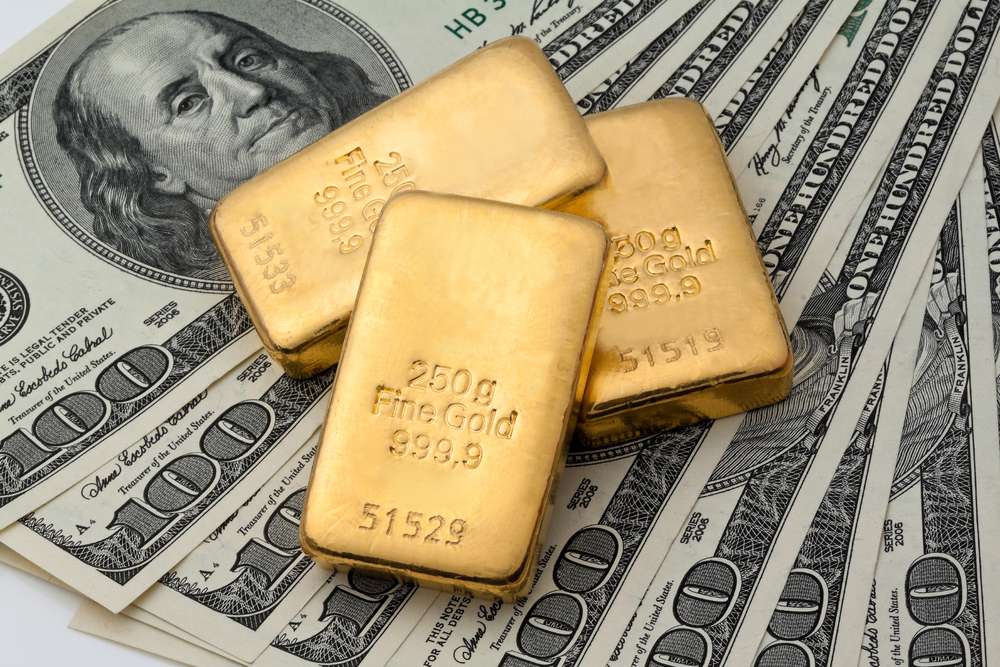
feature photo

It looks like Bill Gross has stumbled upon his bull market.

But so have gold bugs and, after today, maybe gold share investors also.

There are only two things gold bulls should worry about from this point forward, now that the general commodity correction is out of the way and the froth has been worked out of the market: deflation in the strict sense of the term (monetary, not asset deflation) or a suddenly brightening economic outlook, both of which, in this writer's opinion, would require a political austerity hardly imaginable these days.

As far as deflation goes, we saw that the Federal Reserve inflated its balance sheet by an astonishing US$600 billion (almost 70%) in September, $170 billion of which ended up as an un-sterilized liquidity injection into the financial system - also unprecedented any way it is measured.

It is almost as much as the entire U.S. banking system created in the 12 months ending August 2008. It is about 20% of the cumulative amount of reserves the Fed has directly injected into the banking system since its inception in 1913. In one month, the Bernanke Fed "printed" MORE money than the Greenspan Fed in its entire easing campaign from 2001-03 - on top of which the banking system created $1.5 trillion.

Let me be the first to tell you that this represents a deliberate and abrupt change in monetary policy.

The Fed is no longer sterilizing its liquidity injections by selling off assets - probably because it doesn't have any left. No one else seems to have caught on yet. The Fed is now printing with abandon, as literally as that can mean.

However, that isn't enough to convince the deflationists. They point out that banks aren't lending and that credit markets have frozen all over the world.

This is obviously true. However, it does not follow from this that there will be deflation.

Let me reiterate that first, whether deflation comes about or not (I think not), the financial crisis is deepening precisely because, up until last month at any rate, the Fed had not created much money, despite the massive rate cuts. This policy was unconventional and deliberate. It was aimed at gold.

It has produced many things that the Austrian business cycle theory would predict from the policy.

The enterprises that are failing today are boom dependent. They have come to depend not only on the artificial stimulus of lower interest rates, but on a continued expansion in credit and money supply.

Indeed, Fed and Treasury officials, the media and Wall Street all talk as if the economy could not grow if the banks were not producing new credit. For them, boom and growth are one and the same thing.

The market is telling you that some operations are uneconomical in the absence of this "stimulus."

If the Fed continued on its austerity program (with respect to the printing press), the dominoes would no doubt continue to fall. This would be a process of returning the economy to equilibrium, if you will.

That is the definition of a bust or recession. It would probably be deflationary.

The Fed wasn't aiming for that. It wanted only to put the squeeze on inflation expectations building in the gold and currency markets without undermining the boom. It was a bold and new move, but naive. But its actions can only suggest that it is realizing this, and is not prepared to do what is right - nothing.

Lending strikes are not new. They are typical at the height of a crisis.

The Fed has published data on reserves only up until the third week of September, so it does not yet reflect the $170 billion net increase in reserves created by the Fed through the entire month, as I had reported last week. However, up to Sept. 24, the Fed created some $84 billion in reserves, while the figure for total reserves increased by $67 billion (from $44 to $111 billion) in the same period.

Excess reserves, meanwhile, increased by about the same amount.

Don't get caught up in the numbers. These facts essentially support the view that banks aren't lending out those new reserves. However, this fact is neither new nor typically long lasting.

U.S. depository institutions are required to have about 10% of their checkable demand deposits at the Fed as reserve. This amount peaked at a little over $60 billion in the mid-'90s, declined to about $40 billion by the end of the century and has hovered around that number ever since, as if inflation did not exist. It pales in comparison with the more than $1.5 trillion in reserves that the Fed has pumped into the banking system in its entire 95-year history or the $4-5 trillion in deposits that the U.S. banking system has created on top of that in the same period (even after accounting for deposits destroyed).

This is leverage, but the Fed, not the stock market, controls the denominator.

The reason that total reserves have been shrinking has to do with reserve requirements.

Although savings deposits are often checkable in practice and can be accessed by debit cards, banks are not required to keep reserves against them. Therefore, banks like to sweep (and create) as many of these deposits as possible into the savings categories.

That's why there is an upward bias to the underlying trend in the ratio of excess to total reserves. It does not reflect an increasing tendency for bankers to restrict lending voluntarily, but likely understates the inflation in reserves.

But while the figure on total reserves may have become obsolete and lost much of its relevance, big changes in the data are always important and shed light on things.

Today, the Fed is opening new windows through which to transmit policy. It can inject liquidity directly into money markets, and now commercial paper markets. It can lend directly to primary dealers. It can buy mortgages. It can pay interest on deposits, which will have two effects: exposing the hidden reserves (above) and luring money into the Fed. The latter is deflationary, but the interest payments are inflationary, if "unsterilized."

At every crisis that is bigger than the last, the deflation argument is always compelling. But it is fundamentally misguided if it is related to the idea of asset deflation or deleveraging. These concepts are not interchangeable with deflation.

Deflation, for instance, hasn't occurred since 1933, but deleveraging and asset deflation have, often - last in the 2000-02 bear market, and even as the Fed and banking system created a bunch of money.

Banks don't make money on the interest differential from lending out other people's deposits. They make money by lending out more than they take in... by "creating" deposits (i.e., inflation).

This is what a fractional reserve banking system does. It will lend again once it is confident that the central bank is making funds easily available and stands ready to bail banks out. By not printing until last month and letting Lehman go, the Fed sent out mixed messages that it is only now clearing up.

Abolishing the Fed would be a great idea.

Your freedom would be secure. Recessions would be gone. Governments would not be able to increase spending without immediate retribution. Growth and equality would become synonymous.

Crazy?

Not really. It's basic economics.

However, it appears somewhat utopian given the public's attitudes about the market and politics.

Most of the world, led by its political leaders, believes that the economic crisis was caused by greed and excess in the private sector, that the market is inherently unstable or that deregulation was the culprit.

Even some Austrian School authors blame the repeal of Glass-Steagall - the New Deal-era legislation that prohibited bank holding companies from owning nonbank financial firms or competing with securities and insurance companies - for the crisis. That's ironic for reasons I won't get into here, but it is a qualified charge - meaning deregulation is a good idea only if the central bank didn't exist.

I personally don't agree.

Still, people by and large do NOT see monetary and fiscal policy as interventions causing disequilibrium.

They see them as offsetting and stabilizing institutions - safety nets and tools of economic and social management - as they were supposedly envisioned.

For this reason, I posit, central banks and governments do not have the political will it takes to do nothing.

The change in Fed policy last month proves precisely that, which is why gold should soar.

I believe the markets are wrong again to perceive a deflationary outcome. It is an entirely different monetary system than existed in the 1930s, when the Fed could not simply print up reserves.

Deleveraging and asset deflation are not bearish for gold, as they don't necessarily imply a contraction in money supply, and rarely have. They may be bearish for gold stocks, but they are bullish for gold prices, because they are the very factors that motivate the near- certain cries for new credit (or more money) arising from a bad understanding of the true causes of the crisis. They are not new and are ultimately dwarfed by the next crisis.

But maybe the deflationists will be right about the behavior of banks this time. They have been wrong at each point in history when the economy faced a crisis caused by inflation. The thymological (historical) experience is that when the Fed inflates, the banking system does soon after. The Fed has never inflated in one month as much as it did in September. So the odds are against deflationists.

Indeed, the money supply could grow 25-50% in less than a year if that liquidity isn't taken back.

Ultimately, though, both the prior boom and the bust can be explained wholly by the Fed's specific policies. As will the next boom... in gold mining!

Ed Bugos
for The Daily Reckoning Australia

VN:F [1.9.11_1134]
please wait...
Rating: 0.0/10 (0 votes cast)
VN:F [1.9.11_1134]
Rating: 0 (from 0 votes)


P.S. to get The Daily Reckoning direct to your inbox sign up to our free e-mail newsletter or if you prefer to use RSS, subscribe to the Daily Reckoning RSS feed.

Related Articles:

  • Optimists Expect Mild Inflation in a Decent Recovery
  • World Economy Faces Hyperinflation or Deflation?
  • Federal Reserve and the Huge Tsunamis of Money
  • Gold is in a Bull Market
  • What Inflation Means to Central Bankers, Investors and the Consumer

There Is 1 Response So Far. »

  1. Comment by Greg Atkinson on 18 October 2008:

    I am cautious about gold since we need to also factor in a potential drop in demand. It is true prices will be driven by investors looking for a safe haven, but if demand from India and Asia collapses we could well see gold follow the other commodities down.

    VA:F [1.9.11_1134]
    please wait...
    Rating: 0.0/5 (0 votes cast)
    VA:F [1.9.11_1134]
    Rating: 0 (from 0 votes)

Post a Response

Comment moderation policy: Port Phillip Publishing supports free speech and frank and open conversation. But we reserve the right to modify or delete your comments if we consider them to be offensive or in violation of any laws, including Australia's anti-discrimination laws

By submitting your comment you agree to adhere to our comment policy.


  • Why Should I Sign Up?   We Value Your Privacy
  • Master trader predicts next move for ASX...

    Latest Slipstream Trader Video Market Update Just In... watch for free below.


    One viewer said these prediction videos were “scarily accurate”... another said Murray Dawes was “well on the money”... To find out where the Slipstream Trader thinks the market is headed next, and what that could mean for your investments, click below now to watch his latest video update...

    8th February 2012 - Market Update

    It’s one thing to have a view on where the market is headed next... It’s another to have specific stock trading recommendations emailed to your inbox.

    To take a 90-day, no obligation trial of Slipstream Trader, click here
  • Search

    The Markets

    All Ordinaries4359.400  chart0.000
    S&p/asx 2004285.100  chart0.000
    China Shanghai Co2351.854  chart-0.126
    Gold Sep 110.00  chart0.00
    Clj11.nym0.00  chartN/A
    Nikkei 2258999.18  chart+52.01
    Indu0.00  chartN/A
    S&P 5001352.10  chart+9.46
    Ftse 1005905.70  chart+53.31
    2012-02-13 00:35

    Most Comments

    • Australian House Prices Are Severely and Seriously Unaffordable (312)
    • Majority of Australians Believe House Prices Will Rise in Next Twelve Months (293)
    • Gas is the New Oil (256)
    • A Date for an Aussie House Price Collapse (251)
    • How to Profit From the Path of Progress (230)

    Archives

  • Headline Archive

  • Slipstream Trader

    Thousands now trade the markets who never thought they could...

    Breakthrough in trading techniques helps regular investors:

    • Determine how much to risk in a trade
    • Lock in profits while the position is still open...
    • Exit a losing position before a share tanks...

    If you thought trading was too complicated, prepare to be surprised... click here
  • Australian Wealth Gameplan

    "A rapid contagion is spreading.
    Even if you think you are relatively safe, this is a new, permanent risk. It will be with us for the next decade, or even two”.

    - Edward Morse, Veteran oil trader

    Right now a ‘paradigm shift’ is taking place that could present you with the single biggest investment opportunity of your lifetime.

    It also represents risks to your portfolio that could surpass those of the Global Financial Crisis fallout.

    Get full details in this just-completed presentation. (turn on your speakers)
  • Diggers & Drillers

    “Why a mining executive told me to F*** Off
    in front of a whole room of investors”
    Dr. Alex Cowie doesn’t have the most popular of jobs. At least – not inside the mining industry. For his readers, it’s another matter entirely.

    As Laurence says: “I have never bought a stock and got a 100% return before … thanks for providing the information for me to have that experience – and all within two months too!”

    Right now Alex has unearthed six “must buy” resource stocks for the year ahead. His method for finding them might annoy a few people in the industry… but it could help make a lot of money in 2012 too.

    Find out why, right here

  • Home
  • Newsletters
  • About
  • Subscribe
  • Columnists
  • Contact Us
  • RSS

All content is © 2005 - 2011 Port Phillip Publishing Pty Ltd All Rights Reserved

We encourage you to republish our material, all we ask is that you provide a working text link back to the original article on this site.
Port Phillip Publishing Pty Ltd holds an Australian Financial Services License: 323 988. ACN: 117 765 009 ABN: 33 117 765 009
email: dr@dailyreckoning.com.au Tel: 1300 667 481 Fax: (03) 9558 2219
Port Phillip Publishing Attn: The Daily Reckoning PO Box 899 Braeside VIC 3195

Terms and Conditions | Privacy Policy | Financial Services Guide

SEO Powered by Platinum SEO from Techblissonline