Hedge Funds Underperform the S&P 500

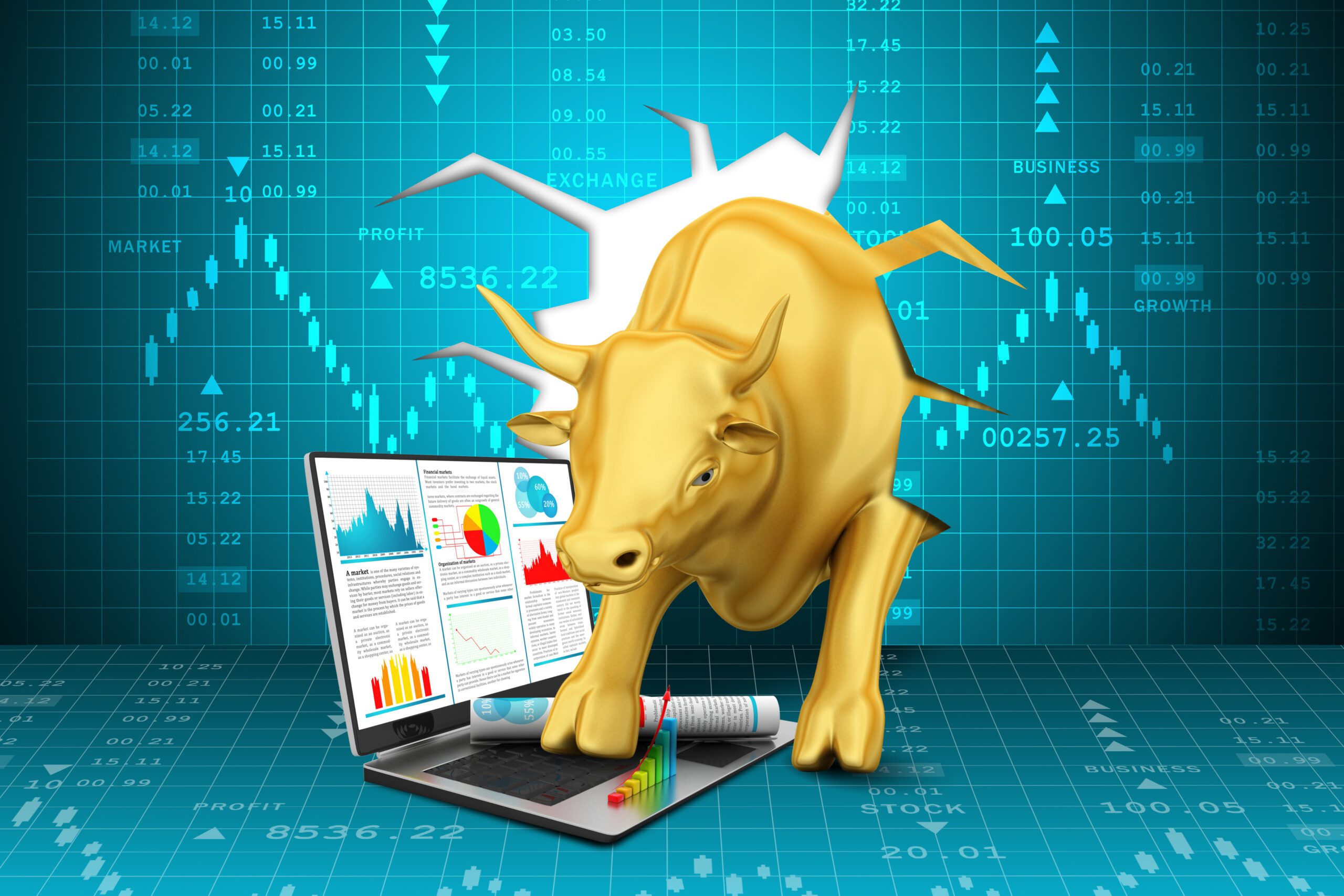
Hedge funds reported a somewhat improved year in 2006, with an average return of 13 to 14 per cent.  However, even that recovery left them with a lower return than could have been gained from the S & P 500.   An S & P index tracking fund would have cost the investor much less, and would have involved less risk.  It would also have offered a much higher degree of liquidity.  Investors need to remember that there is an opportunity cost when one locks up one’s money.  Many hedge fund investors are now prepared to lock up their money for two years.

Investors also need to remember that even good hedge fund managers often underperform the market, and third or fourth quartiles managers can underform to a dismal degree.   It is true that the active Atticus Capital’s European fund was up on the year by more than 44 per cent, and GLG partners emerging market fund rose by 60 per cent, giving some justification to the F.T.’s exuberant heading “Hedge funds boost performance.”  Yet Goldman Sachs (NYSE: GS), that extraordinary warehouse of brains and money, saw some of its big funds either fall or make derisory gains.  Global Alpha was actually down by 6 per cent.  The fund mangers who work for Goldman Sachs are just as clever and well informed as those who work for last year’s more successful funds.  Most investors, at the beginning of last year would have had total confidence in Goldman Sachs’s market skills.  Indeed, most still do.  If Goldman Sachs can have a bad year, anyone can.

However, I am not particularly concerned about underperformance in 2006.   I have argued before that a well-managed long only fund offers comparable average returns to current hedge funds at less cost and less risk.  Essentially, most hedge funds depend on leverage, and debt is always a risk factor.   I am also sceptical about the management skills of the lower quartiles of fund managers.  If one adds leverage to good management one is likely to get good performance.  If one adds leverage to weak fund management, one is only too likely to get very poor results.

That said, the worry about hedge funds is that they are exposed to an alarming environment of geopolitical risk.  In strategic studies, as practised by the world’s staff college, there is a sinister phrase, “low probability, high impact, events.”  It was the assassination of an Austrian Archduke which caused the First World War in 1914, a war in which twenty million people died, the Russian Revolution occurred, Germany and Austria were defeated and the world was turned upside down.   Nobody in January 1914 would have predicted that occurrence, yet it was far more important than any other political or financial event.  The world is still reeling from the aftershock, just as Europe in 1907 was still shaped by the outcome of Napoleon’s leadership of France.

The low probability, high impact, event of our time has been 9/11.   Just as the Austrian reaction to the murder of their Crown Prince led to the First World War, the American reaction including the invasion of Iraq in March 2003, expanded and deepened the crisis which had been caused by the original acts of terror.

This has a direct relationship to political and defence problems both for the United States and the rest of the world, and to the concerns of all investors.  The investor needs to understand the instability of the post 9/11 world.   For instance, we do not know whether Israel, or the United States, is going to attack the nuclear sites in Iran.  We do not know what the consequences of such an attack would be.  We do not know whether the Sunni-Shia conflict in Iraq is going to spread to the rest of the Middle East.  We do not know what impact these hypothetical events would have on the oil price, or on global inflation.

That is only the beginning of the list of what we do not know and cannot possibly know.  If one puts the question in terms of the oil price, one could argue that oil will decline to around $30 a barrel, based on existing supply and declining demand.  One could also argue that a Middle East war could raise the price to $150 a barrel.  It is what we do not know that matters.

The hedge fund managers do not know either.  They are committed to making big bets on limited evidence.  Some of these bets will be correct, or just lucky.  Some hedge fund managers will produce 50 per cent returns.  But some will lose a great deal of money.  In an exceptionally unstable world, the investor ought to avoid risk.  When the hedge fund managers cannot match the S & P 500, they are a risk which can reasonably be avoided.

William Rees-Mogg
for The Daily Reckoning Australia

Related Articles:

VN:F [1.7.5_995]
Rating: 0.0/10 (0 votes cast)
VN:F [1.7.5_995]
Rating: 0 (from 0 votes)

P.S. to get The Daily Reckoning direct to your inbox sign up to our free e-mail newsletter or if you prefer to use RSS, subscribe to the Daily Reckoning RSS feed.

Related Articles:

  • None Found

About the Author

William Rees-MoggLeading political editor William Rees-Mogg is former editor-in-chief for The Times and a member of the House of Lords. He has been credited with accurately forecasting glasnost and the fall of the Berlin Wall – as well as the 1987 crash. His political commentary appears in The Times every Monday. His financial insights can only be found in the Fleet Street Letter, the UK's longest-running investment newsletter.

See All Posts by This Author

Post a Response

Comment moderation policy: Port Phillip Publishing supports free speech and frank and open conversation. But we reserve the right to modify or delete your comments if we consider them to be offensive or in violation of any laws, including Australia's anti-discrimination laws

By submitting your comment you agree to adhere to our comment policy.


© Copyright The Daily Reckoning Australia & Port Phillip Publishing Pty LTD 2010 All rights reserved.

Port Phillip Publishing Pty Ltd holds an Australian Financial Services License: 323 988. View our Financial Services Guide.

ACN: 117 765 009 ABN: 33 117 765 009

Port Phillip Publishing
Attn: Daily Reckoning Australia
PO Box 899
Braeside
VIC 3195

Tel: 1300 667 481
Fax: (03) 9558 2219