

• Featured
  • Australasia
  • The Americas
  • Europe
  • Africa
  • Market
  • Precious Metals
  • Resources
  • Currencies
  • Real Estate
  • The Bonner Diaries

Hooray for the Economic Recovery!…of 2016


By David Galland • July 29th, 2010 • Related Articles • Filed Under

About the Author

David GallandDavid Galland is the Chairman of Casey Research, publishers of BIG GOLD, an inexpensive monthly advisory dedicated to providing unbiased and actionable research on simple, effective and cautious ways to participate in rising gold markets.

See All Articles by This Author

  • US Treasury Secretary a True Believer in Economic Recovery
  • How Inflation is Preventing a Real Economic Recovery
  • The Economic Recovery Myth
  • The Economic Recovery Flop
  • Path to Economic Recovery Filled With Lethal Obstacles
Filed Under: Australasia • Currencies • Europe • Market • Precious Metals • The Americas
Tags: debt • economy • fed • Gold • government • inflation • Market • stock

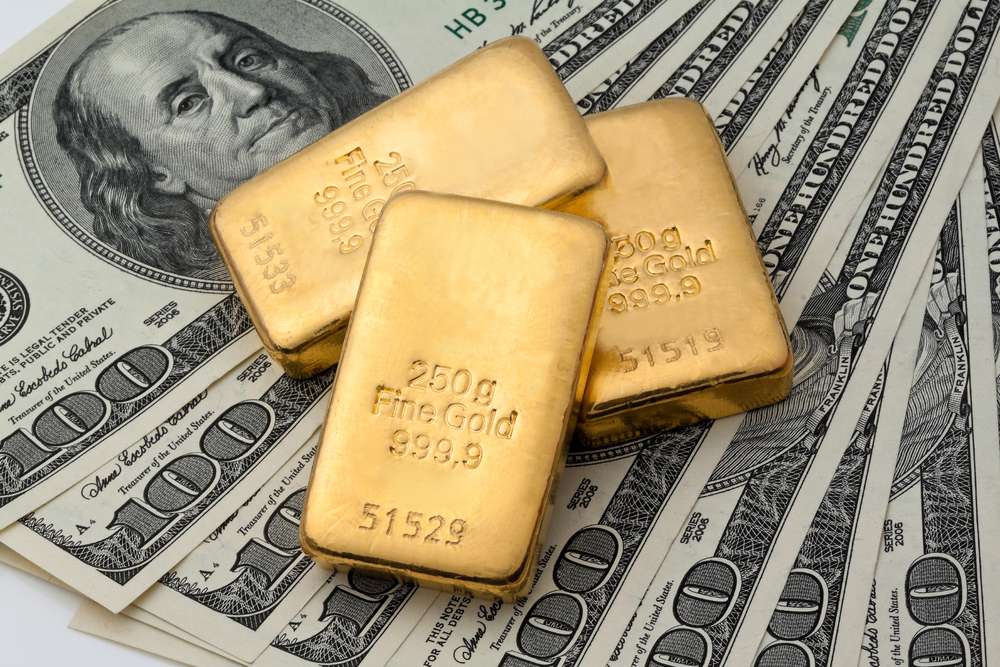
Last week, the price of gold again broke below its new base at $1,200, and the US stock market was again under strong pressure, due to a confluence of fears, most of which point to a deflationary double-dip. The fears were fanned by disappointing second quarter results, by the latest CPI reports that show inflation continuing to moderate, and by yet another poll revealing faltering consumer confidence.

The market is also spooked, no doubt, by notes from the latest Fed Beige Book that make it clear that the Fed is (finally) beginning to understand the entrenched and endemic nature of this crisis. While the notes are written in shamanic double-speak, the point is clear: members of the Fed don't expect the economy to get back on track until 2015 or 2016.

"Participants generally anticipated that, in light of the severity of the economic downturn, it would take some time for the economy to converge fully to its longer-run path as characterized by sustainable rates of output growth, unemployment, and inflation consistent with participants' interpretation of the Federal Reserve's dual objectives; most expected the convergence process to take no more than five to six years."

The simple reality the Fed is waking up to is that the structural underpinnings of the economy are damaged beyond any quick or easy fix.

That's because until the excess and/or bad debts are wrung out of the system - either through default or raging inflation - there's no chance of any sustainable economic recovery. Each new government initiative - the latest being financial reform - that doesn't decisively address the debt, but rather tightens the government's around private enterprise, only serves to delay or prevent economic revival. And so each new day will bring more distress and bankruptcy to homeowners, businesses, and banks.

Pundits are fond of saying that things are never really "different this time around"... yet there is something truly unusual now going on. See if you can spot the disconnect in the following descriptions of the current economy.

  • Record total debt.
  • Record government deficits.
  • Record trade deficits.
  • Massive additional government debt financing required to keep the doors open and avoid reneging on social contracts directly affecting the quality of lives of millions of people around the globe - the US, Japan, and Europe especially.
  • Near record-low interest rates.

Anything strike you as out of place?

The current setup with massive debts and low, low interest rates is like making an uncollateralized loan to a mere acquaintance at a very friendly, low interest rate. Then he comes back again for more, and more, and more. Because you live in a small town, you know he's putting the touch on a bunch of other people too. And because you know his loose-lipped accountant, you also know what his income is, and even what his total debts are - and it is blatantly obvious that he won't be able to repay his debts in a dozen lifetimes.

So would you keep lending him money? And, if you did, would you do it at the same friendly interest rates?

Not hardly. And therein lies the Twilight Zone-caliber disconnect in the world as we know it.

In a recent conversation with my dear partner and friend of several decades, Doug Casey, he made the point that the situation today should only exist if the fundamental laws of economics had been suspended. Interest rates should be going up, but they aren't. Rather, they are bumping along at the very bottom of the possible range.

In my view, this is testimony to the truly extraordinary lengths - involving trillions of dollars - that the US Treasury and the Fed have gone to in recent years. But they can only suspend the laws of economics for so long before the fundamentals again rule. And when that happens, the entire system could literally collapse. Not to sound dramatic, but it could happen almost overnight.

As frustrating as it may be to all of us, the world is still locked firmly in the jaws of a powerful bear market. While the bear may loosen its bite now and again, it's really only temporary...to get a better grip.

That being the case, it's worth remembering the single most important thing about bear market investing: it's very difficult. Or, put another way, it's hard to make a decent return without taking extraordinary risk.

As Doug points out, in the current environment, everything - including commodities - is overvalued. And they are going to remain that way until they aren't. Maybe the Fed actually has it right this time, and the bottom won't be reached until 2015 or 2016? I wouldn't argue with that assessment.

But what of the inflation we see as inevitable? And gold, in the interim?

Let me quickly tackle the second question first.

In any debt crisis, the foremost concern of creditors is to get paid back. Compared to that, returns on investment come in a weak second. In a sovereign debt crisis, the question of repayment is complicated by the fact that the debtors control the creation of the currency units that will ultimately be used for payments.

Individual and institutional holders of US Treasuries, along with other assets amounting to trillions of US currency units, can see with their own eyes what's going on. To continue holding such large quantities of instruments denominated in these unbacked currency units - or those labeled "euros" or "yen" - is to risk being left with a lot of worthless paper as the governments try to repay debtors by creating the stuff, literally, out of thin air.

And so these holders diversify their portfolios into alternative, and far more tangible, assets - gold and silver included. That is the fuel that has sent gold higher over the last ten years and that will keep it high - short-term corrections notwithstanding.

It is, however, when the inflation from all the money creation starts to appear that we'll begin to see the shift into gold begin in earnest, and the price will really take off. When might that occur? Rather than trying to answer that question myself, I'll refer you to the latest, excellent edition of, Conversations with Casey, in which Louis James interviews Casey Report co-editor Terry Coxon on the outlook for inflation.

Here's an excerpt...

Coxon: All of the runaway deficit spending [by the US government] is not, in and of itself, inflationary. By spending borrowed money, the government does not increase the money supply...

L: Ah. You're saying that out-of-control government spending isn't inflationary, but sets the stage for future inflation, when money has to be created to pay the government's debts?

Coxon: What it does is create a political motive and economic need for inflation. These huge deficits may have slowed the recession that began in 2008, but to keep the recession from worsening, the Federal Reserve will have to prevent interest rates from rising for months or years to come. And to do that, it will have to start printing money to buy up debt instruments whenever the economy starts recovering, to keep interest rates down to levels that will not choke off the recovery.

L: So more money creation will be necessary to keep interest rates low, but at some point, the foreigners holding dollars, believing it to be a sound currency, will have to get worried about all this dilution of the dollar - and that would tend to force interest rates up, as it will take more and more to convince those people to keep buying T-bills and such.

Coxon: The world outside the US has become like a giant capacitor for US inflation. The charge that's building up is the accumulation of dollars and dollar-denominated assets in the hands of foreigners. When the outside world wakes up to the threat of inflation in the US, they will start unloading US dollars, which will suppress the dollar's value in foreign exchange markets, which will make prices of imports (including oil) go up, and that will be a separate vector feeding price inflation in the US.

For now, the key is to get through this period in the best possible shape. That means watching your debt levels, keeping well cashed up, buying gold on dips, and, when you venture into investment markets, it's never been more important to understand what you are investing in and why. There's no need to chase anything - which means you have the luxury of building your portfolio over time, on exactly the terms you want.

While it may sound contradictory, I think this is also a good time to learn more about speculating. In the simplest terms, a speculator risks just 10% of his/her portfolio in the hopes of receiving a 100% return. By comparison, most investors put 100% of their portfolio at risk in the hopes of getting a 10% return (actually, these days, most people would be happy with just 5%).

In the case of the speculator, 90% of the portfolio can be largely kept in cash and gold. So, who's more at risk - the investor or the speculator?

And where are the best speculations found today? Personally, I like energy, and I very much like bottom fishing in the junior gold sector. That's because there are some terrific Canadian junior exploration and mining companies sitting on large known deposits. But their share prices periodically fall back based on nothing more than investor emotion. That's called a buying opportunity.

David Galland
for The Daily Reckoning Australia

VN:F [1.9.11_1134]
please wait...
Rating: 10.0/10 (4 votes cast)
VN:F [1.9.11_1134]
Rating: +4 (from 4 votes)
Hooray for the Economic Recovery!...of 2016, 10.0 out of 10 based on 4 ratings


P.S. to get The Daily Reckoning direct to your inbox sign up to our free e-mail newsletter or if you prefer to use RSS, subscribe to the Daily Reckoning RSS feed.

Related Articles:

  • US Treasury Secretary a True Believer in Economic Recovery
  • How Inflation is Preventing a Real Economic Recovery
  • The Economic Recovery Myth
  • The Economic Recovery Flop
  • Path to Economic Recovery Filled With Lethal Obstacles

About the Author

David GallandDavid Galland is the Chairman of Casey Research, publishers of BIG GOLD, an inexpensive monthly advisory dedicated to providing unbiased and actionable research on simple, effective and cautious ways to participate in rising gold markets.

See All Posts by This Author

There Are 8 Responses So Far. »

  1. Comment by biggus dickus on 29 July 2010:

    In this debt crisis it seems that creditors just can't lend enough money to those who can't pay it back. Or they are just incredibly stupid.

    VA:F [1.9.11_1134]
    please wait...
    Rating: 0.0/5 (0 votes cast)
    VA:F [1.9.11_1134]
    Rating: 0 (from 0 votes)
  2. Comment by Tim on 31 July 2010:

    I’m confused. Money is a commodity. When a commodity is in short supply and demand is high, the commodity goes up in price. In this case interest. Controlling interest rates is a way of controlling the price of money. If we artificially keep interest rates low this makes borrowing money cheap in spite of high demand. To ease demand, you propose to print more money.

    If I read this correctly we are stuck between a rock and a wall. If you don’t increase the money supply you drive prices up. If you print more money you create inflation, the side effect being higher prices. Either way you loose.

    VA:F [1.9.11_1134]
    please wait...
    Rating: 0.0/5 (0 votes cast)
    VA:F [1.9.11_1134]
    Rating: 0 (from 0 votes)
  3. Comment by Tim on 31 July 2010:

    I could not help but continue thinking about this on the drive home. I came to the conclusion I was wrong in thinking prices would go up if the supply of money is not increased but rather will go down. And I came to the conclusion the reason for printing more money is to prevent deflation.

    So why prevent deflation? Isn’t it almost always followed by inflation?

    Maybe I’m just thinking about this way too much. It is time to kick back and enjoy a beer and plan my Saturday.

    VA:F [1.9.11_1134]
    please wait...
    Rating: 0.0/5 (0 votes cast)
    VA:F [1.9.11_1134]
    Rating: 0 (from 0 votes)
  4. Comment by Stillgotshoeson on 31 July 2010:

    Comment by Tim on 31 July 2010:

    So why prevent deflation? Isn’t it almost always followed by inflation?

    The rich fear deflation....

    VA:F [1.9.11_1134]
    please wait...
    Rating: 0.0/5 (0 votes cast)
    VA:F [1.9.11_1134]
    Rating: 0 (from 0 votes)
  5. Comment by Biker Pete on 31 July 2010:

    The rich fear deflation?

    Some of them, perhaps. Inflation, the steady erosion of capital, is a. more probable; b. more persistent over time.

    We've had two Zimbabwean tenant mining families over the years. Granddad's superannuation would certainly once have deemed him rich, particularly in Africa. By the time he retired, it wouldn't even buy him an airline ticket to visit his family in Oz.

    As folk with assets, we don't fear deflation at all. So what if our properties are worth half as much on paper? The man in the street has far more to lose from deflation, starting with employment. And once unemployment rises, the tax base is eroded.

    Deflation? I doubt I'll see it here in Australia in my lifetime. No doubt all hell will break loose once our mineral wealth is gone, but that's another story... . ;)

    VA:F [1.9.11_1134]
    please wait...
    Rating: 0.0/5 (0 votes cast)
    VA:F [1.9.11_1134]
    Rating: 0 (from 0 votes)
  6. Comment by Stillgotshoeson on 1 August 2010:

    Why "we" should not hold certificates in bullion but the real bullion or shares in the miners..

    http://www.theglobeandmail.com/news/national/christie-blatchford/an-unkind-complicatedness/article1643419/

    VA:F [1.9.11_1134]
    please wait...
    Rating: 0.0/5 (0 votes cast)
    VA:F [1.9.11_1134]
    Rating: 0 (from 0 votes)
  7. Comment by Lachlan on 1 August 2010:

    Good article Shoes, reinforcing my suspicions. Yep bank attitudes to PMs give away the plot. Gold is money and the best money we have, "the ultimate extinguisher of debt".
    Another good site highlighting need to hold physical.

    http://harveyorgan.blogspot.com/

    VA:F [1.9.11_1134]
    please wait...
    Rating: 0.0/5 (0 votes cast)
    VA:F [1.9.11_1134]
    Rating: 0 (from 0 votes)
  8. Comment by Lachlan on 1 August 2010:

    I'm purchasing PMs regularly while they are under the high made Jan 09 but more so on the dips such as now. There appeared to be a fair sized short cover Friday last. I got the feeling too that silver is in great demand (beneath the paper suppression) so getting more tomorrow.

    VA:F [1.9.11_1134]
    please wait...
    Rating: 0.0/5 (0 votes cast)
    VA:F [1.9.11_1134]
    Rating: 0 (from 0 votes)

Post a Response

Comment moderation policy: Port Phillip Publishing supports free speech and frank and open conversation. But we reserve the right to modify or delete your comments if we consider them to be offensive or in violation of any laws, including Australia's anti-discrimination laws

By submitting your comment you agree to adhere to our comment policy.


  • Why Should I Sign Up?   We Value Your Privacy
  • Master trader predicts next move for ASX...

    Latest Slipstream Trader Video Market Update Just In... watch for free below.


    One viewer said these prediction videos were “scarily accurate”... another said Murray Dawes was “well on the money”... To find out where the Slipstream Trader thinks the market is headed next, and what that could mean for your investments, click below now to watch his latest video update...

    8th February 2012 - Market Update

    It’s one thing to have a view on where the market is headed next... It’s another to have specific stock trading recommendations emailed to your inbox.

    To take a 90-day, no obligation trial of Slipstream Trader, click here
  • Search

    The Markets

    All Ordinaries4357.100  chart-6.600
    S&p/asx 2004282.900  chart-7.800
    China Shanghai Co2349.589  chart+2.059
    Gold Sep 110.00  chart0.00
    Clj11.nym0.00  chartN/A
    Nikkei 2259002.24  chart-13.35
    Indu0.00  chartN/A
    S&P 5001349.96  chart+2.91
    Ftse 1005873.20  chart-2.73
    2012-02-09 00:37

    Most Comments

    • Australian House Prices Are Severely and Seriously Unaffordable (312)
    • Majority of Australians Believe House Prices Will Rise in Next Twelve Months (293)
    • Gas is the New Oil (256)
    • A Date for an Aussie House Price Collapse (251)
    • How to Profit From the Path of Progress (230)

    Archives

  • Headline Archive

  • Slipstream Trader

    Thousands now trade the markets who never thought they could...

    Breakthrough in trading techniques helps regular investors:

    • Determine how much to risk in a trade
    • Lock in profits while the position is still open...
    • Exit a losing position before a share tanks...

    If you thought trading was too complicated, prepare to be surprised... click here
  • Australian Wealth Gameplan

    "A rapid contagion is spreading.
    Even if you think you are relatively safe, this is a new, permanent risk. It will be with us for the next decade, or even two”.

    - Edward Morse, Veteran oil trader

    Right now a ‘paradigm shift’ is taking place that could present you with the single biggest investment opportunity of your lifetime.

    It also represents risks to your portfolio that could surpass those of the Global Financial Crisis fallout.

    Get full details in this just-completed presentation. (turn on your speakers)
  • Diggers & Drillers

    “Why a mining executive told me to F*** Off
    in front of a whole room of investors”
    Dr. Alex Cowie doesn’t have the most popular of jobs. At least – not inside the mining industry. For his readers, it’s another matter entirely.

    As Laurence says: “I have never bought a stock and got a 100% return before … thanks for providing the information for me to have that experience – and all within two months too!”

    Right now Alex has unearthed six “must buy” resource stocks for the year ahead. His method for finding them might annoy a few people in the industry… but it could help make a lot of money in 2012 too.

    Find out why, right here
  • AFTER AMERICA

    The Single, Smartest Investment
    Move You Will Make This Decade...


    ...could be to join us at the Intercontinental Hotel Sydney this March 14 to 16. The entire Port Phillip Publishing team—plus some prestigious keynote speakers—will discuss one crucial question: what happens to Australia ‘After America’?

    If you like what we publish… and if you’re thinking about what to do with your money in the year ahead—you should book your ticket now. There are only 344 places available...

    To find out more, click here.

  • Home
  • Newsletters
  • About
  • Subscribe
  • Columnists
  • Contact Us
  • RSS

All content is © 2005 - 2011 Port Phillip Publishing Pty Ltd All Rights Reserved

We encourage you to republish our material, all we ask is that you provide a working text link back to the original article on this site.
Port Phillip Publishing Pty Ltd holds an Australian Financial Services License: 323 988. ACN: 117 765 009 ABN: 33 117 765 009
email: dr@dailyreckoning.com.au Tel: 1300 667 481 Fax: (03) 9558 2219
Port Phillip Publishing Attn: The Daily Reckoning PO Box 899 Braeside VIC 3195

Terms and Conditions | Privacy Policy | Financial Services Guide

SEO Powered by Platinum SEO from Techblissonline