• Featured
  • Australasia
  • The Americas
  • Europe
  • Africa
  • Market
  • Precious Metals
  • Resources
  • Currencies
  • Real Estate
  • The Bonner Diaries

The Great Inflationary Melt-Up… Coming to an Economy Near You


By Dan Denning • March 20th, 2007 • Related Articles • Filed Under

About the Author

DanDan Denning is the author of 2005's best-selling The Bull Hunter (John Wiley & Sons). He began his financial publishing career in 1997 and has covered financial markets form Baltimore, Paris, London and, beginning in 2005 Melbourne. He’s the editor of The Daily Reckoning Australia and the Publisher of Port Phillip Publishing.

See All Articles by This Author

  • None Found
Filed Under: Market

Money, money, everywhere, and not a stock to buy.

Nerves are frayed in America. Ever seen a central banker quail in fear? Just watch CNBC this month. We reckon there will be plenty of furrowed brows and damp foreheads.

You see, it is now dawning on market pundits that we're on the verge of a huge inflationary melt-up, and that is not a good thing. And we mean melt-up in the hot, nuclear sort of way.

"Fed may reduce rates three times this year, amid housing woes," reports Bloomberg. "Big four to ride liquidity wave," reads another headline in the Sydney Morning Herald.

As if there weren't enough cash and credit driving stock and house prices up all over the globe, Bloomberg reports that the U.S. futures markets are now predicting the Fed will cut rates this year to try and avert the blooming crisis in the U.S. housing market. Note to Fed: you do not control long-term interest rates, and thus mortgage rates.

Second note to Fed: you can lower rates all you want, but mortgage lenders (the ones that are left and healthy) are already raising lending standards. The liquidity in the mortgage market is already drying up. Fewer credit- worthy buyers are entering, but plenty of new homes and condos are just now coming on the market. Short version: big increase in inventories, big decrease in buyers. Result? Falling prices, central bank easing, and some kind of repeat of the 1970s, where inflation whipped through the global economy like a scourge of locusts, eating purchasing power day by day.

If you are expecting an instantaneous global meltdown as credit dries up in America, well, you might get it. But odds are the subprime meltdown will be painful and long, punctuated by big one day swings in the share markets (followed by barrels of ink telling you not to panic and buy the dips. Why? 2005 and 2006 were even bigger years for subprime mortgage originations in the States than 2004. Those loans won't adjust to their higher rate for another 12-24 months...meaning the very last people to the house price party won't begin to feel the sting of higher rates and falling prices until later this year and early next.

Still, it might be better to panic now, as we advised a few weeks ago. But panic into what? As we said last week, the problem in most markets right now is too much money, not too little. Too much money makes valuing an asset hard to do. And even when you find something you like, you may be asked to pay too much for it.

What we really need now is a theory of investment relativity. Governments love inflation. America's government and its central bank will need to worship the inflation gods in the near future. Inflation lightens the burden of heavy debt loads by making possible to pay back loans (or bonds) in paper currency of increasingly less value. You simply print more of the stuff ( U.S.dollars.)

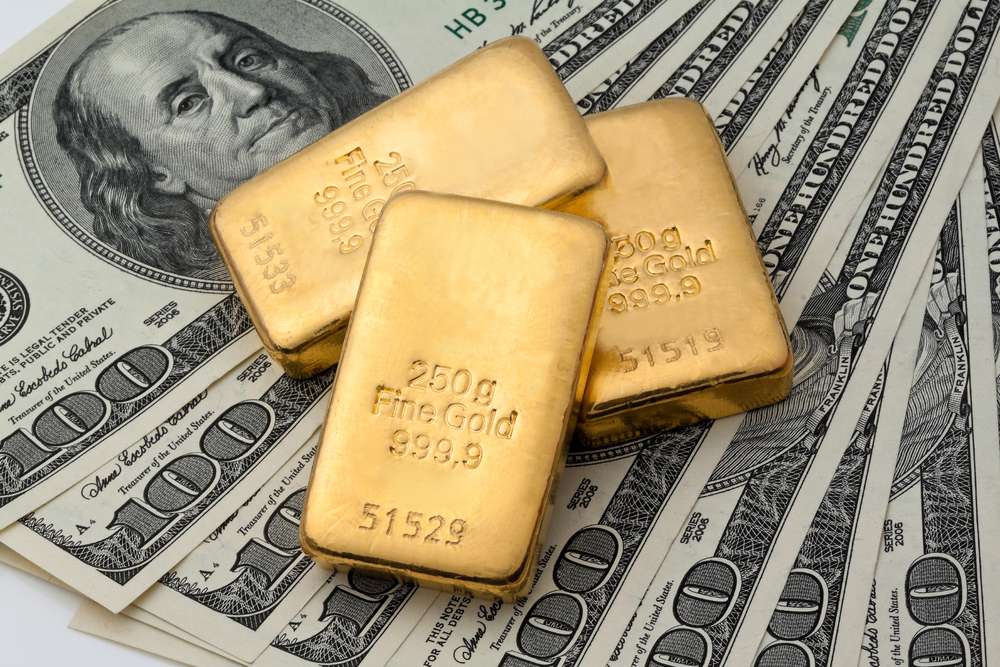
This is what the Fed has said it plans to do. And if it does so, spurred by the rising scream of voting American homeowners, then you'll see rising stock and home prices. The real question is what will go up the most in dollar terms: gold or the Dow?

It will be a great inflationary melt up. And if history is any guide, owning assets that are hard to produce is the best way to preserve the purchasing power of your savings and cash. That means precious metals over ordinary financial shares, or shares of precious metals companies, over, say, financial stocks.

We would not recommend, for example, that you buy shares in newly-floated "alternative asset" management firms, aka Pirate Equity firms going public. "BLACKSTONE Group is closing in on an initial public offering that would enable the US private equity group to raise billions of dollars, massively enrich its top executives and thrust the booming buyout industry further into the public spotlight" reports a wire service story.

The only people who will get rich from private equity going public are the underwriters who arrange the IPO and the pirate insiders. Everyone else is a sucker, and will probably get screwed.

On the other hand, while creating new shares or private equity funds seems to be remarkably easy these days, finding uranium is still difficult. In today's world, any commodity whose supply cannot be increased by a meeting of men in suits and ties is worth a second look. Uranium, gold, grains, biofuels and a few other commodities fall in that category.

Uranium is probably headed to US$100 quite shortly, stunning us into regret here at the Old Hat Factory. We'd hoped for a larger correction to buy into. But we may have to wait a few decades for lower prices. "In a case of perfect timing, Perth's Paladin Resources on Friday officially opened the world's newest uranium mine, Langer Heinrich in Namibia. Paladin stands to be the biggest Australian beneficiary of the higher uranium price, which has spiked as a supply shortage has coincided with a huge jump in demand," reports today's Australian.

Pretty simple formula isn't it? Find assets short in supply but growing in demand. This rules out most stocks and bonds, both of which are in ample supply, are already being chased by billions of dollars, and are getting increasingly harder to value.

How about local housing? A reader wrote in asking what we thought of the local market. We are not expert on the local market. But here's an uninformed opinion: the high end will be fine because the rich are getting richer and can pay with cash. The middle and lower end is where the damage will be done. You don't make homes more affordable by making credit more available. That increases homeownership, but also inflates home prices so much that new buyers must become indentured servants just to get into the market.

Yet that's precisely where we find ourselves in late March 2007. Debt has become the only way to paper wealth. It's a pretty horrible trade, if you ask us. That's why we find ourselves trading down this weekend, looking to downsize our life-style (and monthly rental payment) in anticipation of tougher times ahead. We are wary of cash because inflation eats purchasing power the way a sumo wrestler eats sushi. But we'd rather be in cash than stocks and bonds. The liquidity crunch is coming...and it will be followed by the great inflation...it's time to fireproof your portfolio.

Dan Denning
The Daily Reckoning Australia

VN:F [1.9.11_1134]
please wait...
Rating: 0.0/10 (0 votes cast)
VN:F [1.9.11_1134]
Rating: 0 (from 0 votes)


P.S. to get The Daily Reckoning direct to your inbox sign up to our free e-mail newsletter or if you prefer to use RSS, subscribe to the Daily Reckoning RSS feed.

Related Articles:

  • None Found

About the Author

DanDan Denning is the author of 2005's best-selling The Bull Hunter (John Wiley & Sons). He began his financial publishing career in 1997 and has covered financial markets form Baltimore, Paris, London and, beginning in 2005 Melbourne. He’s the editor of The Daily Reckoning Australia and the Publisher of Port Phillip Publishing.

See All Posts by This Author

Post a Response

Comment moderation policy: Port Phillip Publishing supports free speech and frank and open conversation. But we reserve the right to modify or delete your comments if we consider them to be offensive or in violation of any laws, including Australia's anti-discrimination laws

By submitting your comment you agree to adhere to our comment policy.


  • Why Should I Sign Up?   We Value Your Privacy
  • Master trader predicts next move for ASX...

    Latest Slipstream Trader Video Market Update Just In... watch for free below.


    One viewer said these prediction videos were “scarily accurate”... another said Murray Dawes was “well on the money”... To find out where the Slipstream Trader thinks the market is headed next, and what that could mean for your investments, click below now to watch his latest video update...

    8th February 2012 - Market Update

    It’s one thing to have a view on where the market is headed next... It’s another to have specific stock trading recommendations emailed to your inbox.

    To take a 90-day, no obligation trial of Slipstream Trader, click here
  • Search

    The Markets

    All Ordinaries4319.200  chart-40.200
    S&p/asx 2004243.000  chart-42.100
    China Shanghai Co2338.115  chart-13.74
    Gold Sep 110.00  chart0.00
    Clj11.nym0.00  chartN/A
    Nikkei 2259011.54  chart+12.36
    Indu0.00  chartN/A
    S&P 5001351.77  chart+9.13
    Ftse 1005905.70  chart+53.31
    2012-02-14 23:05

    Most Comments

    • Australian House Prices Are Severely and Seriously Unaffordable (312)
    • Majority of Australians Believe House Prices Will Rise in Next Twelve Months (293)
    • Gas is the New Oil (256)
    • A Date for an Aussie House Price Collapse (251)
    • How to Profit From the Path of Progress (230)

    Archives

  • Headline Archive

  • Slipstream Trader

    Thousands now trade the markets who never thought they could...

    Breakthrough in trading techniques helps regular investors:

    • Determine how much to risk in a trade
    • Lock in profits while the position is still open...
    • Exit a losing position before a share tanks...

    If you thought trading was too complicated, prepare to be surprised... click here
  • Australian Wealth Gameplan

    "A rapid contagion is spreading.
    Even if you think you are relatively safe, this is a new, permanent risk. It will be with us for the next decade, or even two”.

    - Edward Morse, Veteran oil trader

    Right now a ‘paradigm shift’ is taking place that could present you with the single biggest investment opportunity of your lifetime.

    It also represents risks to your portfolio that could surpass those of the Global Financial Crisis fallout.

    Get full details in this just-completed presentation. (turn on your speakers)
  • Diggers & Drillers

    “Why a mining executive told me to F*** Off
    in front of a whole room of investors”
    Dr. Alex Cowie doesn’t have the most popular of jobs. At least – not inside the mining industry. For his readers, it’s another matter entirely.

    As Laurence says: “I have never bought a stock and got a 100% return before … thanks for providing the information for me to have that experience – and all within two months too!”

    Right now Alex has unearthed six “must buy” resource stocks for the year ahead. His method for finding them might annoy a few people in the industry… but it could help make a lot of money in 2012 too.

    Find out why, right here

  • Home
  • Newsletters
  • About
  • Subscribe
  • Columnists
  • Contact Us
  • RSS

All content is © 2005 - 2011 Port Phillip Publishing Pty Ltd All Rights Reserved

We encourage you to republish our material, all we ask is that you provide a working text link back to the original article on this site.
Port Phillip Publishing Pty Ltd holds an Australian Financial Services License: 323 988. ACN: 117 765 009 ABN: 33 117 765 009
email: dr@dailyreckoning.com.au Tel: 1300 667 481 Fax: (03) 9558 2219
Port Phillip Publishing Attn: The Daily Reckoning PO Box 899 Braeside VIC 3195

Terms and Conditions | Privacy Policy | Financial Services Guide

SEO Powered by Platinum SEO from Techblissonline