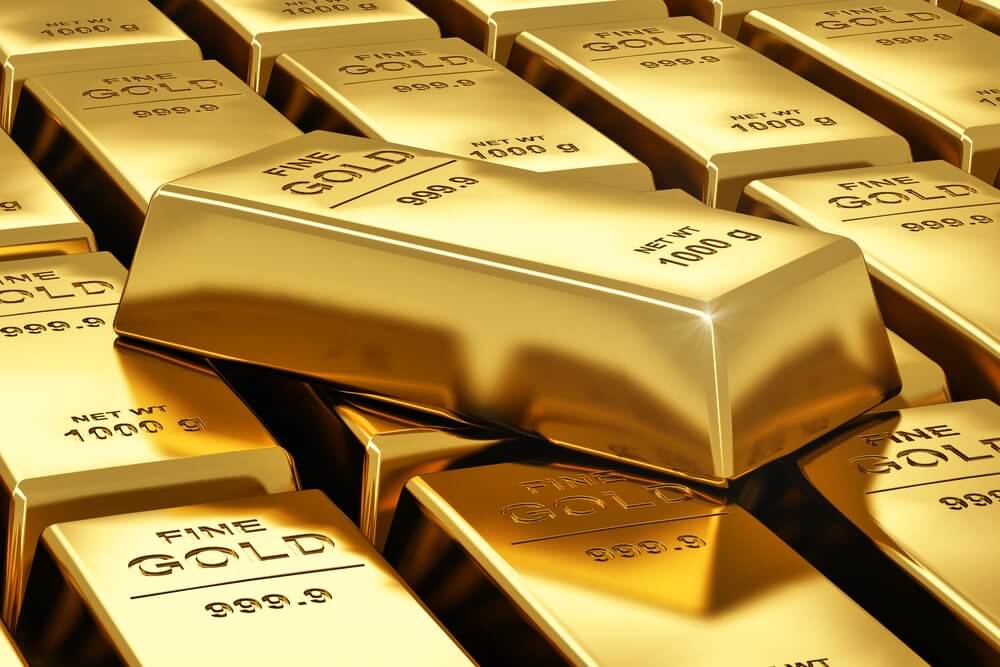
Buy Tangible Assets, Not Paper

Only in the investment game does rock ever beat paper. Normally, if you throw down a flat palm in an old-fashioned game of Paper, Scissors, Rock, paper wins, smothering the rock. But in investment markets, if we take rock to represent "stuff" and paper to represent "paper assets" then "rock" is on a roll. Rock on.

By rock, we also mean, "tangible assets and resources" as opposed to say, mortgage-backed securities and credit derivatives. Part of what you're seeing this week is the steady migration out of paper-backed assets and into tangible assets. Roughly, generally, and simplistically speaking, this is bad for America and its dollar, but good for Australia and its dollar.

Granted, we should note that a share in a resource company, even a great one like BHP, is a paper claim on real wealth. You are still one step removed from actual ownership of a tangible asset. You don't own red iron ore from the Pilbara itself. You own BHP common.

But we'd humbly submit that being one step removed from actual ownership of a tangible asset is better than being one step-removed from actual ownership of financial asset. The first claim is drawn an actual, physical, capital asset that produces income. The second is a claim on the future income of someone who may or may not honour that claim. Hmm.

Of course, when you really think about it, what can you tangibly call your own when you own, say a subprime mortgage? You own the right to a future stream of income payments from some poor, unfortunate, would-be homeowner.

The value of your asset, then, is variable. It is utterly dependent on the good credit and timely payments of American debtors. Some people call that investing. GE calls it a loss-making exercise.

Last week the so-called American manufacturing conglomerate reported that it would write down over $500 million in so-called assets. One of the company's divisions, WMC, is America's fifth largest subprime mortgage writer. GE lost US$373 million in the first quarter as result of subprime trouble. And while the company is writing down the value of its mortgage assets on the one hand, it is inexplicably seeking a buyer for its $10 billion plastics business on the other.

This reminds us of burning the furniture in your house to keep warm in the winter. It may keep you warm for awhile, but it would be better to just throw on an extra jumper and grit it out. You'll need that couch to rest your backside on later. But people do stupid things like selling valuable assets to raise cash, especially in times of need.

Dan Denning
The Daily Reckoning Australia

VN:F [1.7.5_995]
Rating: 0.0/10 (0 votes cast)
VN:F [1.7.5_995]
Rating: 0 (from 0 votes)

P.S. to get The Daily Reckoning direct to your inbox sign up to our free e-mail newsletter or if you prefer to use RSS, subscribe to the Daily Reckoning RSS feed.

Related Articles:

  • None Found

About the Author

DanDan Denning is the author of 2005's best-selling The Bull Hunter (John Wiley & Sons). Dan draws on his network of global contacts from his base in Melbourne. He’s the managing editor of resource newsletter Diggers and Drillers and the editor of The Daily Reckoning Australia.

See All Posts by This Author

Post a Response

By submitting your comment you agree to adhere to our comment policy.


© Copyright The Daily Reckoning Australia & Port Phillip Publishing Pty LTD 2009 All rights reserved.

Port Phillip Publishing Pty Ltd holds an Australian Financial Services License: 323 988. View our Financial Services Guide.

ACN: 117 765 009 ABN: 33 117 765 009

Port Phillip Publishing
Attn: Daily Reckoning Australia
PO Box 899
Braeside
VIC 3195

Tel: 1300 667 481
Fax: (03) 9558 2219

SEO Powered by Platinum SEO from Techblissonline