


Have we told you how much we love Argentina? It's a dream... at least for an economist with an 'I-told-you-so' bent and a sense of mischief. For everyone else, it is a nightmare.
Argentina is to the economist what a corrupt small town must be to the novelist, where he can see who's sleeping with whom, who's drinking too much, who's not paying his bills, and who's getting too fat. Who's doing right... who's doing wrong... so much inspiration... !
In Argentina - past and present - we get to see the whole gamut of how much damage economists and politicians can do.
You see, Argentina is naturally a rich country. It is big. It has huge potential... with the richest farmland in the world... plenty of water... plenty of minerals and other resources. It's a European country - well, it is inhabited by immigrants from Sicily, which probably explains a lot.
As such, it is heir to all the science, experience and philosophy of the Enlightenment... and all of the technological progress of the Industrial Revolution... and all the claptrap theories and perversions of the European and American intellectual elites of the 20th century.
So, what do Argentinians do with their good fortune? They sabotage it, of course. The fifth richest country in the world in 1900... today, it is in 50th place. Buenos Aires has more people in psychotherapy than any other city; a fact which might also explain a lot.
Is there is any policy so wrongheaded that the Argentinians haven't tried it at least twice?
Well, yes... They haven't followed the path of the Bolsheviks... or the Maoists... They haven't engineered mass famines... mass murder (just a few thousand victims, during the military junta years)... or mass land expropriations. But... there's always the future!
What we like about Argentina is that we can observe the mistakes and the dysfunction and still live reasonably well - at least in our mountain fastness.
It was only a few months ago that the Argentine government expropriated the country's biggest oil company. Now, it has taken over the private company that prints its pesos! Here's that latest from the Buenos Aires Herald Tribune (we like the little paper so much, we're thinking of trying to buy it!):
"... on Thursday the Senate voted by a margin of 44-20 votes to expropriate the Ciccone money-printing company (eight other senators, including ex-president Carlos Menem, remained on the sidelines), all 64 senators could be said to have sound reasons in favour of their stance. Who could argue against the principle of monetary sovereignty underlying this bill (since not even the world's most free-market economies would think of privatizing the coinage)?"
But here is where it gets interesting. When the government expropriates... it pays compensation. It might take over the company printing its money for some sort of deformed patriotic motive. Or, it might do so because insiders have gotten control of the company and are now going to cash out at the taxpayers' expense.
"Whatever the irregularities within Ciccone preceding this move and however justified the suspicions that this nationalization is one vast cover-up, all the shady details of the case are not the concern of Congress, strictly speaking, but of the court investigating the scandal..."
That's what makes everything in financial life on the pampas so darned interesting - you know it's corrupt... but it's usually even more corrupt than you realise. There's often a corruption within the corruption... a back-story... a scam on the scammers...
In short, it is delightful to watch... as long as you're not too close.
Now that the Argentine government has taken control of the company that prints its money, what will happen? You can expect that it will do about the same thing as other government-controlled enterprises. Expenses will rise; output will decline. It will be like the US Post Office... Amtrak... or the Social Security Administration. Even at printing money, Argentina will be ... hapless... and incompetent.
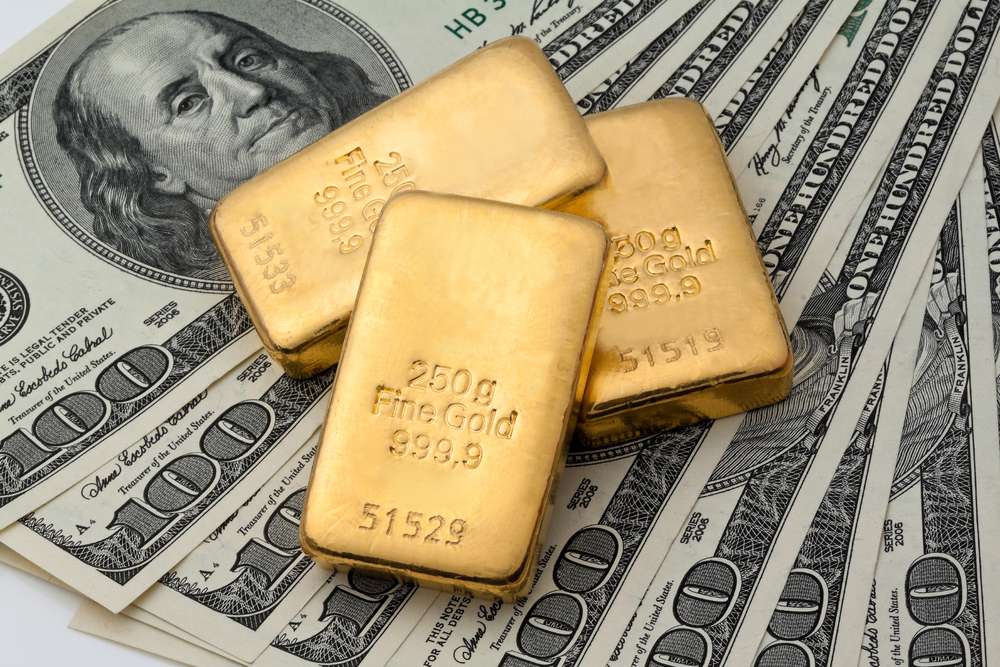
Already, a peso printed in 2012 will lose a third of its value by 2013. Soon, with the money-printer run by the government, a peso will have lost all its value even before it is printed!
Back in the US, the feds are still stuck in Tokyo-mode. They print money. They lend a ZIRP (zero interest rate policy). They bail out key industries. But the cash doesn't go into the economy. It doesn't push up consumer prices - at least, not yet. It goes into bank vaults... where it is used to buy US Treasuries. That is, it is lent back to the people who printed it in the first place!
Nice system. Nutty. Pointless. Dopey. Very Argentine.
And it must be just a matter of time until people in the US begin to anticipate the same sort of shenanigans - with the same sort of results - as have plagued the pampas for half a century. According to Larry Summers, the government will grow, no matter who wins the White House.
Why? Because more old people mean more demands for pensions and health care. Second, higher debts mean higher debt service payments. Third, the things that government buys - health care and military hardware - are getting much more sophisticated and expensive.
Compared to TVs, the price of a hospital stay has increased 100 times since the early '80s. And fourth, the feds will have to spend more on infrastructure... and more to offset the effects of growing inequality of incomes, says Summers.
As it grows, the government will make more quirky interventions in the economy... redistribute more wealth... depress the rate of real economic growth... and make people poorer... just like the government of Argentina has done since the '50s. And then, it will crack up and go broke from time to time, again, just like south of the Rio Plata.
Government services will cease working. Government cheques will cease having value. Government agencies will collapse and government employees will become the enemies of the people.
But at least the Social Security Administration, headquartered in Baltimore, is getting prepared. Here's an item from the Economic Policy Journal:
Social Security Administration To Purchase 174 Thousand Rounds Of Hollow Point Bullets
What does the Social Security Administration fear?
The SSA is set to purchase 174,000 rounds of hollow point bullets that will be delivered to 41 locations across the country, Infowars is reporting.
Hollow point bullets are designed to expand as they enter the body, causing maximum damage by tearing apart internal organs.
A solicitation posted by the SSA on the FedBizOpps website asks for contractors to supply 174,000 rounds of ".357 Sig 125 grain bonded jacketed hollow point pistol ammunition".
An online ammunition retailer describes the bullets as suitable "for peak performance rivaling and sometimes surpassing handloads in many guns," noting that the ammo is "a great personal defense bullet".
The ammunition is to be shipped to 41 locations within 60 days of purchase. A separate spreadsheet lists those locations, which include the Social Security headquarters in Baltimore, Maryland as well as major cities across the country including Los Angeles, Detroit, Oklahoma City, Dallas, Houston, Atlanta, Denver, Philadelphia, Pittsburgh and Seattle.
The DHS also recently purchased a number of bullet-proof checkpoint booths that include 'stop and go' lights, says Infowars.
The US is still a long way from Argentina... but it is getting there.
Regards,
Bill Bonner
for The Daily Reckoning Australia
From the Archives...
Staring Down the Barrel of Bad Debt
17-08-2012 - Greg Canavan
Taking Over From the US Dollar With Organic Finance
16-08-2012 - Greg Canavan
Australian Banks on the Run
15-08-2012 - Bill Bonner
The Secret Investment to Buy When GDP Falls
14-08-2012 - Nick Hubble
Will the Latest Data From China Cause a Rally in Aussie Stocks?
13-08-2012 - Dan Denning
P.S. to get The Daily Reckoning direct to your inbox sign up to our free e-mail newsletter or if you prefer to use RSS, subscribe to the Daily Reckoning RSS feed.
Related Articles:
- China’s Economy is Now Freer and More Competitive than the United States
- Kirchners Lose Election in Argentina
- Mitt Romney and the Tax Zombies
- Our Cattle in Argentina
- Like Argentina, Without the Steak
About the Author
Best-selling investment author Bill Bonner is the founder and president of Agora Publishing, one of the world's most successful consumer newsletter companies. Owner of both Fleet Street Publications and MoneyWeek magazine in the UK, he is also author of the free daily e-mail The Daily Reckoning.


Comment by Silvia Mourelle on 23 August 2012:
Hi. Have you ever been to Argentina? where did you take this one " it is inhabited by immigrants from Sicily"?(as if it were a negative factor), You should know our ancestors came from Spain, Italy, Ireland, Germany,Turkey, France and USA (like mines), MENA and many different places. Why do you care so much about us? Your speech is so contemptuous! about us and about the United States of America!! helloooooo!!! As if your country...oh wait a sec! what is your country again? oh! Ok, I got it. You are still living in a UK Colony, you are a subject of a certain queen, fair enough. Both US and us give a flying f* for your opinion. Thank you very much for your attention.
Comment by Janet Rowe on 24 August 2012:
Your article about Argentina’s fall from the 5th richest country to the 50th richest from 1900 - 2012 fails to mention the impact of its population explosion which was a result of its immigration policies.
In 1900 Australia had a population of 3.7 million and Argentina 4.7 million. In 2012 the figures are 26 million and 41 million. There are huge infrastructure and other costs association with population growth (in Australia it is estimated that each new immigrant costs almost $500,000). As both Australia and Argentina get their wealth mainly from resources and farming, it stands to reason that the more people those resources have to support (through taxes paid by the companies) the lower the wealth per head of population.
And now Australia is heading along the same path as Argentina with both political parties supporting population growth and hiding the effects of this by measuring wealth by GDP growth instead of the wealth per head of population.
Why don’t you start talking about population growth and its effects on the individual’s wealth (not to mention our quality of life, which is another huge issue). The list below shows that the top 12 countries all have small populations with the expception of thenited arab emirates, but they have all that oil!
1 Luxembourg
2 Qatar
3 Norway
4 Switzerland
5 United Arab Emirates
6 Australia
7 Denmark
8 Sweden
9 Canada
10 Netherlands
11 Austria
12 Finland
Comment by Julian on 24 August 2012:
Larry Summers is a major douchebag, one of the most culpable individuals behind the Great Recession, but in this case he's right (the sad thing is he wants to be). The government will grow because the current crop of clowns in charge do not believe in Schumpeterian creative destruction.
They believe that money supply must be maintained at all costs in their supposed pursuit of "price stability" (which is actually just an excessive fear of debt-deflation). As the shadow banking system continues to implode (liabilities of the traditional banking sector now exceed the shadow banking sector), the clowns will continue to respond in the only way they know how, running off more and more TSYs to counteract the ongoing degradation in the quality of general collateral. Central banks will continue to buy those TSYs, in the absence of real buyers, and flip them out for lower quality collateral (without imposing a haircut!) that can then be used to re-leverage the shadow system.
Said another way, the ever growing percentage of 'non-marketable assets' being held on central bank books will continue to correlate nicely with an expansion of government spending, where money spent is raised by debt issuance rather than taxation.
This will continue because it's all the clowns know how to do. They wrongly cling to their top down view of the economy, believing that people are products of an economy, instead of realizing that an economy is an abstract concept only and is a product of people. They are then surprised when all their mechanistic 'fixes' in the world of high-finance do nothing to spur an economic revival at the grass roots that could bring real economic activity back up to the level that current money supply suggests it should be at.