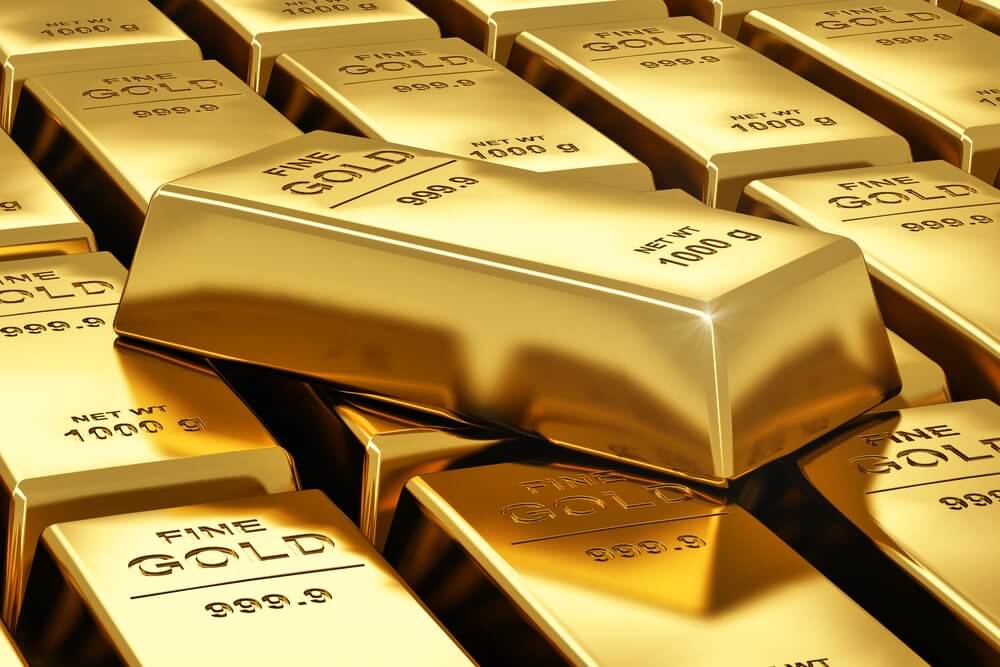
India is looking to shoot the messenger. It wants to ban the sale of gold coins via the banking system. India's currency, the rupee, is falling fast against the US dollar and a range of other currencies. As a result, Indians buy gold to protect themselves against the falling rupee.
The US Dollar Rising Against Indian Rupee

This increases India's imports, which worsens its current account deficit and puts more pressure on the currency. So the Indian government, in their wisdom, look to remedy the situation by trying to discourage gold imports. Genius.
India's problem is that it's no longer the 'hot' economy it was just a few years ago. The 'emerging markets' are now emerging slower than many had hoped. The two big ones, India and China, are not emerging much at all. The hot money that previously flowed into these economies is now lukewarm at best.
So the Indian rupee is under pressure, and apparently it's gold's fault.
The interesting thing about this is that India's private stash of gold is massive. According to the World Gold Council, its citizens hold around 18,000 tonnes of gold. At a US$1,600 gold price, that equates to around US$1 trillion dollars.
That's not US$1 trillion of debt based money. It's unencumbered wealth. But because it sits outside the banking system and out of the reaches of the morons who run the country, the gold has no bearing on India's economy or currency.
There's no doubt Indians would be better off investing that US$1 trillion in gold into productive enterprises, but the country doesn't have the political infrastructure that allows capital to flourish.
We know little about India's economy or political system, but we do know its corruption and bureaucracy are legendary. If you're an average Indian with surplus savings, and you know how India operates, what would you do with the savings?
You follow 5,000 years (give or take a decade) of tradition, and accumulate your wealth in gold. You know bureaucracy and corruption can't touch your gold. You know it will retain its value for you and your children, should they ever need it.
Over the centuries, this mentality has turned the Indian population into the largest gold holders in the world. They hold tremendous wealth. They just don't have the infrastructure to harness it.
This provides important insights into where the western world might be heading.
The West has tremendous wealth, but it's all denominated in debt. As government involvement in the economy continues, and as corruption becomes more and more endemic, individuals will increasingly choose to take a portion of their wealth out of the system and preserve it in gold.
That's why the gold bull market is 11 years old and counting. It reflects the slow but unrelenting change in Western people's minds about how the financial world works卆bout the evolution of wealth and power.
Take this quote from Richard Duncan's new book, The New Depression: the Breakdown of the Paper Money Economy:
'The hard truth is that it is not easy to preserve wealth. If it were, the families who were wealthy 200 years ago would still be wealthy today - and generally, they are not. In the very harsh economic environment that is likely to prevail over the next ten year, it is likely that a great deal of wealth is going to be destroyed.'
Self-preservation and survival is a key human characteristic. Above all else, we want to survive. That counts for financial survival as well. Gold is, and will be, the way to survive this slow and rolling crisis with your wealth intact.
But Western minds have a hard time thinking this way. Gold is for crazies and the paranoid. In that case, there are a lot of nut jobs in India?and they have US$1 trillion to show for it.
Before you think we've gone all eastern and zen-like on you, let's get back to some thoroughly western action...trading!
With the ASX200 hovering around crucial support levels, we asked Slipstream Trader Murray Dawes for his take on the short term outlook. Murray reckons we might 'see some buying support next week due to the end of tax loss selling pressure, but the outcome of the European summit will be the catalyst for future direction. The market is expecting disappointment, so if there is a big announcement a bounce may be imminent.'
But he's still bearish on the primary direction of the market. He sees the market in a 'tug-of-war' around the key support level of 4075 on the ASX200.
'How long this tussle carries on for I don't know but it has lasted for about a month now. Last year when we were faced with a similar technical set up the market took six weeks of to and fro before finally succumbing to the selling pressure and falling 15% in a week.'
Murray says that, if the 4075 level can't hold, we'll quickly find ourselves trading around 3850.
We'll explore that likelihood tomorrow.
Regards,
Greg Canavan
for The Daily Reckoning Australia
From the Archives...
The US Deficit of Deceit
2012-06-22 - Greg Canavan
How Nice to Have Friends At the Fed
2012-06-21 - Bill Bonner
Deep in the Stock Market Trenches
2012-06-20 - Murray Dawes
In Praise of the Eureka Rebellion
2012-06-19 - Dan Denning
What Could Possibly Go Wrong With Infrastructure Investment Bonds?
2012-06-18 - Dan Denning
P.S. to get The Daily Reckoning direct to your inbox sign up to our free e-mail newsletter or if you prefer to use RSS, subscribe to the Daily Reckoning RSS feed.
Related Articles:
- Is the Silver Price Finally Bottoming Out?
- The Pros and Cons of Investing in India
- Bureaucracy and Corruption Holds India Back
- The Investor in Indian Bonds has Ben Bernanke on His Side
- The Great Pretender – India’s Economic Past & Future: Part 2
About the Author
Greg Canavan is the editor of Sound Money, Sound Investments, a financial report devoted to unearthing great value investments amid today's "money illusion" of fiat currency. For a free trial of Greg's service, go to Sound Money, Sound Investments.


Comment by Ross on 28 June 2012:
Legendary corrupt governments are everywhere ...
http://mumbrella.com.au/do-you-ever-think-youre-incompetent-100261
imagine a creepy left-imperialist publicly funded wastrel BBC giving their government a dressing down on fiscal policy
Comment by Gul on 29 June 2012:
The figure of 18000 tonnes of Gold with Indians is disputed... by some accounts it is closer to 30000 tonnes... refer to this comment..
... "The total Gold in the world above ground is estimated to be about 165000 tons as on 2010 ((2009 by this; http://en.wikipedia.org/wiki/Gold_reserve ). Taking the production figure of 36000 tons out from 1996 to 2010 gives a balance of approx. 130000 tons in 1996. Twenty percent of this gives 26000 tons. Fifteen percent gives about 19500 tons. Taking an average gives us 22750 tons. Adding 8250 tons reported by TOI from 1996 to 2010 gives us 31000 tons."...
for more .... http://2ndlook.wordpress.com/2011/11/11/dabbulu-lost-history-of-a-stray-word/#comments
Gul
Comment by Earl Mardle on 29 June 2012:
India's gold wealth is worth $1T only as long as there are people willing and able to exchange $1T for it. So where, exasctly, do you bel;ikeve that this $1T will come from to buy all of India's gold? Or even a significant proportion of it? If we are all going broke together, who is the customer? Wealth that can't be exchanged for useful things like food, clothes, medicines, housing or energy is nothing.
The day they really need it, so will many, many, many others. The day they all start trying to sell their gold on the open market they will find that, in whatever currency it is denominated, it will be worth a lot less than they think.
As you say, India doesn't have the systems in place to enable people to put that gold to work. So a store of wealth that can't be put to work, and that will only be able to be sold in troubled times to those few with any cash or other resources left, will find itself either worthless completely or in a buyer's market.
The really interesting thing is that there are no good alternatives. None. THAT is what will make these exciting times
Comment by Ross on 29 June 2012:
@Earl, you've walked into a problematic place there. My objection to gold is that its market pricing is not risk free and anything at all from paper instrument to commodity or any b/s thing called "money" being declared risk free is certain to become a dodgy bubble asset.
Like you say it is also an issue of how to turn gold into food without intermediary currency. As I say above governments can also control gold price too easily because of its physicality. In the 60's the governments set the price to producers. FDR issued executive order 6102. Governments can lie about their hoards, they can mix gold with other low value metals. All those things become harder and harder to uncover when governments succeed in getting the market to accept gold is risk free asset.
However, places like India and Vietnam do have a long history of treating gold as money with intermediary paper and barter around it. I remember after the Vietnam War that the only people that recognised that in Australia were ex ADF personnel later employed as customs officers who would go easy on refugees carry gold despite what the official tariff said and the media trying to paint these poor people that had lost so much as rich.
To add to my self righteous git record on the supposed "$2bn" JPM derivative whale positions we have the next step of what might be many more declared below:
Morgan Chase & Co. (JPM) fell more than 6 percent in European trading after the New York Times (NYT) reported the lender’s trading losses from credit derivatives may total as much as $9 billion, exceeding the firm’s initial estimate.
Comment by Gul on 30 June 2012:
The problem wtih people like Earl is that they are not only not willing to think outside the "western" definitions of money that have existed for the past 40 years or so but are also ignorant of the the way the gold market works in India.
In almost all the streets of all the cities and towns and almost all the village centres in India there are jewellers (who are also money lender/exchangers) who against the morgage of gold or silver will extend a loan at a reasonable rate of interest. This is what makes the economy of India so resilient whenever there are problems on the external front. India is one of the few economies that has grown at a minimum of 6.5 % growth in the last decade. Before that for the past 50 years India has averaged 3-4% GDP growth consistently since independence.
Earl's point of there being no buyer of during times of emergency is laughable. During times of emergency only two things can happen. Either the local currency has hyperinflated (1923 weimar Germany)or there is a shortage of paper currency due to deflation (1932 US and Europe). None of these situations are possible in India. And history shows us that India has never had a period of hyperinflation or deflation resulting in an economic collapse. During hyperinflation gold automatically performs the function of the senior currency giving people who own it the requiste purchasing power. In deflation again the purchasing power of gold rises as compared to other commodities and people who own it get a reprieve till the time things become normal (which they do eventually).
The argument that gold does not serve the purpose that it has done for 5000 years and that too in India where it is almost a cultural icon shows the lack of understanding some of the observers still have about it's historical and economic value. It also shows the colonial hangover that some westerners still have about India and it's ancient wisdom.
Gul
Comment by fairguy on 2 July 2012:
Great comments, Gul.
Comment by Ed_B on 2 July 2012:
I can well understand anyone wanting to trade rupees for gold but why would anyone want to give up their gold for rupees? Daily spending money? Maybe. If so, it better be VERY short-term.
Comment by Silver bull on 3 July 2012:
great one gul. Well said ! this is quit interest artical to read. And have to wait to see how India play out. Definitely, the one who own gold and silver has the abilities to trade world wide will the debt bonds dependence economy either cant buy anymore bonds or printing money cant buy you anything on the street. Which finally people would need physical stuff to trade.
From just reading Gul's comment, it seems like India is way way ahead of what can happen in the future when paper money final die out. It seems they already have a system of trading Gold on the street already, it would take much effort for them to trade Gold with other life essential, like water, food, housing. It just a matter of building on the system from what they have now.
They would be the biggest buyer in the next generation.
Comment by Gul on 3 July 2012:
Thanks @Silver bull and @fairguy for your comments! Well actually to really understand the power behind India's gold reserves read this here...http://2ndlook.wordpress.com/2007/11/10/india-the-worlds-richest-economy/
As you will see even a poor Indian family has a minimum of 5 grams of gold. At current prices of Rs.2800 per gm that is about Rs.14000. This is enough for a poor Indian family to feed itself for about 4-6 months or maybe even more. This is the crux of the issue.In an emergency with gold being the only "money" that will be execpted anywhere - atleast till such time the government reforms and brings out a new currency, or revalues the current one as was done in 1933 in the USA - it provides the necessary safety for even the poorest Indian family to overcome this difficult period and get on with life. The result is that the economy does not suffer a collapse of the kind witnessed so many times in history where the masses have no savings left to carry on their day to day work.
Another clue to this is that India has one of the oldest "living" cultures of the world. Varanasi the oldest city in the world, yoga, ayurveda, the sanskrit language, indian classical music, indian food and the Gayatri mantra(the oldest known hymn known to man still recited everyday in India)are all examples of a "living" ancient culture. This inspite of being occupied by foriegn powers like the Mughals and the British for almost 700 years.
A culture and civilizaton based on Gold is strong enough to survive any emergency and calamity. India has proved this time and time again.
Comment by Tim Put on 5 July 2012:
Gul - I am a 2ndlooker. The way you have explained 2ndlook's ideas are awesome.
The other aspect that your comment brings to my mind is how 2ndlook traced the Rise of Mafia and global crime tsunami because gold imports were made illegal in India.
http://2ndlook.wordpress.com/2008/12/13/the-greatest-crime-wave-ever/
Governments may decide to make gold illegal again - according to 2ndlook, after Obama's re-election.
Before the crime wave engulfs India, it will make Mafia the rulers of the West!
PS - Gul! 2ndlook was so happy with your comment that he has decided to retire and go to Benares! He says his work is done.